Showing posts with label diaspora. Show all posts

Monday, July 1, 2019

Death of Garnik Stepanian (July 1, 1989)

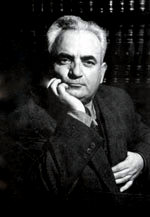
One of the best specialists of Western Armenian culture in Soviet Armenia, Garnik (Der) Stepanian was born on February 14, 1909, in the village of Mamakhatoun, district of Derjan, in the area of Erzinga. In May 1915 most Armenians of Derjan were killed during the genocide; many were forcibly converted to Islam, and the remainders were deported towards Der-Zor. Young Garnik managed to survive and, after the war, he reached Sepastia, where he received elementary education. In 1923 he was moved to Greece together with many Armenian orphans, where he found shelter in the orphanages of Edipsos, Khalkis, and Oropos. Two years later, he found his way to Egypt and worked for the next five years as a typesetter in the daily Arev and the printing house Voskedar.

Stepanian’s life would make a turn in 1930 when he immigrated to Soviet Armenia and found his lost parents there. He continued working as a typesetter, this time at the first printing shop of the State Publishing House. In 1938 he graduated from the Faculty of Philology of Yerevan State University. Meanwhile, he taught Armenian language and literature at the Alexander Tamanian technical school (1937-1939), and Classical Armenian at the Faculty of Philology from 1939-1940. He was a student of famous linguist Hrachia Adjarian, about whom he would write an intriguing memoir (1976).

He wore several hats in the editorial world: he worked at the daily Sovetakan Hayastan, the monthly Sovetakan Hayastan (published for the Armenians of the Diaspora), and the monthly Teghekagir, the social studies publication of the Academy of Sciences of Armenia. In 1943 he became a member of the Writers Union of Armenia and two years later, he published the first novel about the Armenian Genocide in Soviet Armenia, Nightmarish Days (1945), based on his own experience, which was reprinted three times.

Garnik Stepanian worked at the Institute of Literature of the Academy, directed the Museum of Literature and Art from 1954-1963, and was a researcher at the Institute of Art of the Academy from 1963 until his death. He became a prolific and well-regarded name as a historian of Armenian culture, specializing in the fields of Western Armenian literature and theater. He authored monographs about several famous actors in the history of Western Armenian theater, like Bedros Atamian, Arusiag Papazian, Megerdich Djanan, and Siranush, a volume of correspondence by Atamian, and a memoir about another famous actor, Vahram Papazian. His most important contribution to the field was the seminal three-volume monograph, Outline of the History of Western Armenian Theater (1962, 1969, 1975). He would also delve into the theater of the Diaspora, with a series entitled Essays on the History of Diasporan Armenian Theater, of which he managed to write two volumes on French-Armenian (1982) and Armenian-American theater (posthumously published, 2008).

Stepanian not only published monographs on two famous Western Armenian writers, Arpiar Arpiarian (1955) and Hagop Baronian (1956, 1964), but he also translated from Turkish into Armenian the first Turkish novel, Hovsep Vartanian’s Akaby (1953, originally published in 1851), and several works by Baronian.

Another important contribution by Stepanian to the field of Armenian Studies was his three-volume Biographical Dictionary (1973, 1981, 1990), which unfortunately remained unfinished .

In 1967 he earned the title of Emeritus Art Worker of Armenia and four years later he defended his second doctoral thesis in the field of art. In 1980 he was a co-winner of the State Prize of Armenia for the five-volume collective work, History of Modern Armenian Literature.

Stepanian passed away on July 1, 1989, in Yerevan. Among his posthumous works is an especially remarkable 600-page monograph on the history of his birthplace, Erzinga (2005).

Wednesday, May 22, 2019

Birth of Kourken Alemshah (May 22, 1907)

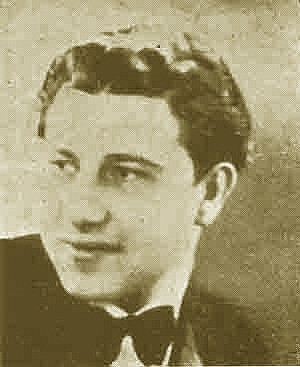
Kourken Alemshah was a well-established, even if prematurely disappeared Armenian composer of the Diaspora in the first half of the past century.

He was born in Bardizag (now Bahcecik), an Armenian village near Izmit, in Western Turkey, on May 22, 1907. He studied at the Mekhitarist School in the neighborhood of Pera (now Beyoglu), in Constantinople, and graduated in 1918. Afterwards, he entered the Moorat-Raphael (Mourad-Raphaelian) School of the Mekhitarist Congregation in Venice, graduating in 1923. He had already shown his talent as a pianist at school, and he pursued musical studies at the Milan Conservatory. His professors saw in him an exceptional talent, unique inspiration, and the ability to mix Oriental music and popular motifs to European technique.

Alemshah graduated in 1930 and settled in Paris, where he taught at the Samuel-Moorat (Samuel Mouradian) school of the Mekhitarists in the suburb of Sevres, as well as in Italian high schools. Along his prolific labor as composer, he also organized the “Cilicia” choir, which became a well-known choir in the big Armenian community of France. In 1933, at the age of twenty-six, he was elected member of the Association of Musical Authors, Composers, and Editors of France. In the 1930s, he composed many works of European inspiration under the pseudonym of Jean Valdonne.

It was particularly impressive a concert of the “Cilicia” choir he directed in 1934 at Salle Gaveau, in Paris, with more than 1,000 people in the audience. Along works by Komitas, he premiered his “Oriental Nights,” composed in 1931 and the vocal-orchestral work “The Battle of Avarayr” (1934). In 1936, on the centennial of his alma mater, the Moorat-Raphael School, he took his choir to Venice and gave concerts both in the famed hall of the school and the St. Mark Square, presenting Komitas songs and his own songs on popular motifs. In 1937 his work “Armenian Wedding,” a combination of Alemshah’s music with popular songs, won the second prize at the international competition of People’s Music, with the participation of twenty nations.

He later conducted the choir “Alakiaz” from 1938-1939, and was appointed conductor of the Sipan Komitas choir from 1939 until his death. He conducted Armen Tigranian’s “Anoush” opera and the performances of the Divine Liturgy in a number of French cathedrals.

In the fall of 1947, Alemshah visited the United States for a series of presentations. In October he conducted a concert at Town Hall in New York City, devoted to Armenian orchestral and choral music. He passed away unexpectedly on December 14, 1947, in Detroit, from a heart attack, a day before his scheduled performance. His funeral was held in New York by the Armenian Catholic clergy, with the participation of the choir of St. Illuminator’s Cathedral. His body was sent to France and buried in Paris.
Some of his vocal scores were published in Paris in 1947. His songs, which are still part of musical programs, are characterized by rare emotional intensity.

Sunday, April 7, 2019

Birth of Varoujan Khedeshian (April 7, 1937)

Varoujan Khedeshian was one of the most innovative directors of Armenian theater in the Diaspora during the second half of the twentieth century.

He was born on April 7, 1937, in Aley (Lebanon). At the age of sixteen, he debuted in the Hamazkayin “Kaspar Ipekian” dramatic troupe, directed by Georges Sarkissian, another famous name of Diasporan theater.

In 1960 he went to London to study at the Webber Douglas Academy of Dramatic Art. He graduated in 1965 and returned to Lebanon, where he joined the Hamazkayin “Levon Shant” dramatic troupe. Two years later, he founded the “Theatre 67” dramatic troupe, which had a very important role in the Lebanese Armenian community until the beginning of the civil war in 1975. Khedeshian was noted for staging works from the Armenian and international repertoire that went outside the mold of tradition, introducing the audience to contemporary works by playwrights like Arthur Miller, Peter Weiss, Edward Albee, and Neil Simon. He would maintain this approach when he took over the direction of the “Kaspar Ipekian” from 1989-2000. He translated a total of 22 plays from English into Armenian.

Some of the works he directed included, along with “Ancient Gods” and “The Emperor” (Levon Shant), “By the Road of Heaven” and “Up to Where?” (Hagop Oshagan), “Alafranca,” “The Oriental Dentist,” and “Brother Balthazar” (Hagop Baronian), “The Piper of the Mountains of Armenia” (Hamasdegh), world-famous works like “The Merchant of Venice” (William Shakespeare), “Who’s Afraid of Virginia Woolf?” (Edward Albee), “Marat/Sade” (Peter Weiss), “The Crucible,” “View from the Bridge,” “The Price,” and “All My Sons” (Arthur Miller), “The Prisoner of Second Avenue” and “Barefoot in the Park” (Neil Simon), “The Master Builder” (Henrik Ibsen), “Romulus the Great” (Friedrich Dürrenmatt), “The Venetian Twins” (Carlo Goldoni), “The Caretaker” (Harold Pinter).

From 1979-1987 Khedeshian staged five dramatic performances in Armenia, both in Yerevan and Leninakan (now Gyumri), and received the “Bedros Atamian” medal in 1987, becoming the first Diasporan Armenian who earned this award during the Soviet period.

His decades-long theatrical activity earned him multiple accolades and several distinctions late in life. In 2000 he was decorated with the “St. Mesrob Mashdots” order of the Holy See of Cilicia by Catholicos Aram I and the Hamazkayin order by the Central Executive Board of this organization. In 2008 the Ministry of Culture of Armenia awarded him its gold medal, and Catholicos of All Armenians Karekin II bestowed upon him the “St. Sahag-St. Mesrob” medal of the Armenian Church. Meanwhile, in 2004 he had received the order of the Institute of Arts of Lebanese University, where he had taught dramatic art from 1971-1999.

Varoujan Khedeshian passed away on December 28, 2015, in Beirut, at the age of seventy-eight.

Saturday, January 26, 2019

Death of Shavarsh Missakian (January 26, 1957)

Shavarsh Missakian was a veteran journalist and political activist who played an important role both in the history of the Armenian press and the organization of the Diaspora.

He was born in August 1884, on the feast of the Assumption of the Holy Virgin, in the village of Zimara, near Sepastia (Sivas). He moved to Constantinople in 1890 with his family, where he studied at the Getronagan School, and became a journalist at the age of sixteen.

He started his career in the daily Surhantag (1899-1908). During the early 1900s, in the last year of the tyrannical regime of Abdul Hamid II, he published and distributed revolutionary literature, and contributed to the journals Droshak (in Geneva) and Razmig (in Plovdiv, Bulgaria) of the Armenian Revolutionary Federation, which he joined in 1907. After the restoration of the Ottoman Constitution in 1908, he published the literary weekly Aztag, with Zabel Essayan, Kegham Parseghian, and Vahram Tatoul from 1908-1909. He also founded a bookstore called Ardziv, which doubled as a publishing house.

In 1911-1912 Missakian settled in Garin (Erzerum) as the editor of the A.R.F. newspaper Haratch. Afterwards, he returned to Constantinople and became a member of the editorial board of the A.R.F. daily Azatamart.

He initially escaped the arrest of Armenian intellectuals on the fateful night of April 24, 1915. He lived clandestinely until March 1916, heading a group of A.R.F. militants who had also escaped the arrests. He provided valuable information and articles to the journal Hayastan of Sofia (Bulgaria), published during 1915, about the ongoing Turkish repression and deportations. The Ottoman authorities could not locate him, and decided to deport his father to Konia, but the latter managed to escape. Shavarsh Missakian was denounced by a Bulgarian spy and arrested on March 26, 1916, when he tried to go to Bulgaria. He was imprisoned and tortured; he tried to escape by throwing himself from the third floor of the prison, but he broke his leg and was captured. He was condemned to death, but the sentence was commuted to five years of prison. In the end, he was freed after the armistice of Mudros on October 30, 1918.

He soon became the editor-in-chief of the daily Djagadamart, which replaced Azatamart, closed on April 24, 1915. In 1919 he traveled to Armenia, where he participated in the ninth General Assembly of the A.R.F. in Yerevan.

The impending advance of the Kemalist forces over Constantinople compelled many Armenians, including Missakian, to take the route of exile. In November 1922 he left the Ottoman capital and moved to Sofia, where he married Dirouhi Azarian (1891-1964), whom he had known when she worked as the bookkeeper for Djagadamart. In November 1924 he was sent to Paris, where he participated in the tenth General Assembly of the A.R.F. (November 1924-January 1925) and was elected a member of the party Bureau, a position that he held until 1933.

In August 1925 he launched the daily Haratch as a personal undertaking. The daily soon became the main voice of the Armenian community of France, with a circulation of 5,000 copies and the sought-after articles of its publisher and editor. Haratch became also a gathering place for the young generation of Armenian writers in the 1920s and 1930s that would be known as the “Paris boys.” It appeared without interruption until the Nazi occupation of Paris, when Missakian decided to voluntarily close the newspaper in June 1940.

Haratch was reopened in April 1945, after the Liberation. Eight months later, in an editorial of December 1945, Missakian coined tseghasbanutiun, the Armenian word for an almost unknown term, “genocide.” He would be one of its frequent users in the press. In the same year, the editor of Haratch would undertake the organization of the new generation with the foundation of the A.R.F.-affiliated “Nor Seround” (equivalent to the Armenian Youth Federation in North America) and its journal Haiastan, which continues its publication.

Shavarsh Missakian directed Haratch until the last day. He passed away on January 26, 1957, and was buried in the cemetery of Père-Lachaise. His daughter Arpik Missakian would succeed him in the direction of the journal, which she would publish for fifty-two more years, until May 2009, continuing her father’s traditions.

Missakian’s short memoir of his survival in the Ottoman prison, Leaves from a Yellowish Journal, was published in 1957, and a collection of his articles scattered in the Armenian press, entitled Days and Hours, in 1958. His memoir was translated into French by his daughter and published in 2015. A square named after him was inaugurated in the ninth arrondisement of Paris in 2007.

Sunday, December 16, 2018

Death of Nigoghos Sarafian (December 16, 1972)


Nigoghos Sarafian is considered the first poet of the Diaspora in the sense that his creation reflected, from his first book, the aesthetic renewal and the issues of identity and rupture with the past that characterize diasporan sensitivity. He was a leading representative of the generation of French Armenian writers known as the “Paris school.”

Sarafian was born on April 14, 1902, aboard a ship going from Constantinople to Varna (Bulgaria). His parents had emigrated from the village of Lichk, in the district of Akn (Kharpert), after its population was decimated in the massacres of 1896. In Varna, Nigoghos—the youngest child in the family—first went to the “Jierjian” and National Armenian schools, and then to the St. Michel French lyceum. During World War I, he left with his elder brother first to Romania and then started a wandering life from Bucharest to Galatz, and then to the Russian cities of Odessa, Rostov, and Novorossisk until the Russian Revolution started. He crossed Romania on foot and returned to the family home in Varna. However, after the war ended, like many other Armenians, in 1919 the future writer moved to Constantinople, where he continued his education at the famed Getronagan School with such important writers as Hagop Oshagan and Vahan Tekeyan as teachers, and graduated in 1922.

Like several of his future colleagues in Paris, he rushed to flee Constantinople before the Kemalist army occupied the Ottoman capital in November 1922. After spending a few months in Bulgaria and Romania, in 1923 he settled in Paris, where he lived for the rest of his life. After trying different jobs, he became a typesetter. He would personally type several of his books.

His first book, The Conquest of a Space (1928), already revealed the originality of his poetry and his departure from the aesthetic canon that ruled over Western Armenian poetry. He would join the group of “Menk” gathered around the homonymous journal from 1931-1933, while contributing poetry and essays to the main literary journals of the Diaspora. His thoughtful style, however, would remain far from the emotional outbursts of Shahan Shahnour and the passionate rebukes of Vazken Shoushanian. After his second book of poetry, 14 (1933), he published the short novel The Princess (1934), and would incursion in the novel with several works published in various journals during the 1930s and 1940s, which were never turned into books.

His poetry, published in limited editions, would not gain public favor, because it was ahead of his time, as the volume Ebb and Flow (1939) showed. Armenian institutional culture ignored him for decades, especially because his poetry was hardly understandable to traditionalist circles in the Diaspora and incompatible with the official criteria of Soviet Armenia. It combined elements reflecting European literary movements with the natural function of thinking that it is part of poetical art, which led to his classification as a “cerebral” poet, somehow leaving him on the margin of the literary canon.

Sarafian published two more volumes of poetry in his lifetime, Citadel (1946) and Mediterranean (1971). His rediscovery started in the sixties, when a generation born and nurtured with diasporan sensitivity had reached the majority of age. He passed away in Paris on December 16, 1972.

In a famous piece about Easter, he wrote:

“We wait for something.
“We reach little by little to a truth above intelligence. As a matter of fact, it is not possible to find a bigger force than the piety of the one who looked with compassion at the armored and burly horsemen surrounding his cross, at the high priests believing themselves to be wise and brave, and at the judges who just carried a stone instead of a heart, a stone that, however, is destroyed soon.
“It is not possible to find something stronger in man than that noble selfishness, which rejects vulgar egotism and injustice, jealousy and malice, tyranny and judgment, arrogance and savagery.
“The Armenian has the heart capable to feel all these, although that heart is fatigued from clashing with the stones, it is grievous and wandering. He waits for all that. We know that we cannot answer to evil with goodness anymore. But all those are the needs burning our intestines.
“We know that all beautiful words pass. But we love all beautiful things.”

Several volumes of Sarafian’s writings, both of poetry and prose, have been collected and published since the 1980s. One of his most influential essays, The Bois of Vincennes, first published in the monthly Nayiri of Aleppo in 1947, was posthumously reprinted as a book in 1988. Since then, it was first translated into French (1993) and recently into English (2014) by Christopher Atamian. 

Saturday, December 1, 2018

Death of Zareh Vorpouni (December 1, 1980)

The best figures of Armenian literature in the Diaspora gathered in France in the late 1920s and early 1930s. Besides Shahan Shahnour, Nigoghos Sarafian, and Vazken Shousanian, the name of Zareh Vorpouni, although much less known to the general public, managed to gain some critical attention until the 1970s.

He was born Zareh Euksuzian on May 24, 1902, in Ordu (Turkey), a city on the southeastern shore of the Black Sea. He studied at the local Movsesian school. His father was killed during the genocide, but his mother managed to flee to Crimea with her family. At the end of the war, the family moved to Constantinople, where Zareh attended the Berberian School from 1919-1922. He published his first literary pieces in the newspaper Joghovourti Tzayne, which he signed Zareh Vorpouni (vorp “orphan” is the Armenian translation of Turkish öksüz).

Like thousands of Armenians leaving the Ottoman Empire as refugees during the turmoil of the Kemalist massacres before the founding of the Turkish Republic, Vorpouni and his family departed for France in August 1922. They settled in Marseilles, where they lived for two years. In 1924 the aspiring writer moved to Paris. In the same year, he jointly edited the short-lived literary periodical Nor Havadk with another aspiring writer, Bedros Zaroyan (1903-1986). From his early days in France, he was an avid reader who acquainted himself with European intellectual trends and prominent works of French literature. He would also enter the French Communist Party, which he left in the 1930s.

Vorpouni, who started publishing short stories and essays in the French-Armenian press, soon conceived a cycle of novels entitled The Persecuted. The first volume, The Attempt, would be published in 1929. It depicted the hard life of an Armenian immigrant family transplanted to Marseilles, where they endured the impact of a totally strange environment.

The novelist entered the group Menk (We), which included a number of young intellectuals (also called “the Paris boys”), mostly genocide survivors, bound to achieve a renewal of Armenian literature by reflecting the social, cultural, and psychological distress undergone by the newly-formed Diaspora and the perils of identity loss. They published the journal Menk from 1931-1932 and then scattered away. Vorpouni moved to Strasbourg from 1930-1937 and, upon his return to Paris, he co-edited another short-lived journal with Zaroyan, Lousapatz (1938-1939). He printed a volume of short stories, Room for Rent (1939), which was only distributed after the end of World War II. Drafted by the French army at the outbreak of the war, he was captured by the Germans and held as prisoner of war in Magdeburg until 1945.

Returning to Paris, in 1946 Vorpouni visited Soviet Armenia upon an invitation to participate in the Second Congress of Soviet Armenian Writers. He published his impressions in a volume, Toward the Country (1948). He returned to literature with a new collection of short stories, Rainy Days (1958), which was followed by another collection, Koharig and Other Stories, in 1966. He explored the psychological features of his characters and identity disintegration, with the trauma of genocide subtly felt through these narratives.

In the 1960s Vorpouni also resumed his novelistic project after a hiatus of more than thirty years. After publishing And There Was Man (1964), which was independent of his cycle of novels, he wrote and published the following three novels of The Persecuted in the space of seven years: The Candidate (1967), Asphalt (1972), and An Ordinary Day (1974). The Candidate presented the main character, Vahakn, embodying the tormented young generation that bore the psychological trauma of the genocide and remained its victim through their actions. The next two volumes probed the sources for the anguish of their main characters. An anthology containing The Attempt, And There Was a Man, and some short stories was published in Yerevan in 1967.

Vorpouni passed away on December 1, 1980, in Bagneux, a suburb of Paris. Two of the last three novels of The Persecuted were posthumously published in literary journals in 1980 (Death Notice) and 1982 (For Thine Is the Power), while the seventh novel remains unpublished. An English translation of The Candidate, by Jennifer Manoukian and Ishkhan Jinbashian, appeared in 2016.

Friday, August 25, 2017

Death of Silva Kaputikian (August 25, 2006)

Silva Kaputikian was one of the most popular Armenian women writers of the twentieth century, as well as a long-time political activist.

She was born Sirvard Kaputikian in Yerevan on January 20, 1919. Her parents were survivors from Van. Her father Barunak (1888-1919), a teacher and member of the Armenian Revolutionary Federation, died of cholera three months before her birth. She was raised by her mother and grandmother. She published her first poem in 1933, when she had adopted the first name Silva, and she attended the Faculty of Armenian Philology at Yerevan State University from 1936 until her graduation in 1941. In the same year, she became a member of the Writers Union of Armenia. By that time, she had already married another poet who would become well-known, Hovhannes Shiraz (1915-1985). They would have a son, the prominent sculptor Ara Shiraz (1941-2014), and divorce later.

Kaputikian joined the Communist Party of the Soviet Union in 1945. In the same year, she published her first collection of poetry, With the Days. It included a poem, “Words to My Son,” that would make her famous as one of the most recognizable poems dedicated to the Armenian language and an assertion of national identity. From that very first book until the end of her life, her writing would focus around two subjects, national identity and lyric poetry, where she also reflected traces of her personal life.

She studied at the Gorky Institute of World Literature in Moscow (1949-1950). She established herself as a significant literary figure in Soviet Armenia by the 1950s. She was awarded the USSR State Prize in 1952. During sixty years of publishing activity, she authored over sixty books in Armenian, including poetry, travelogues, and essays, and several in Russian. Her works were translated into Russian by well known poets like Yevgeny Yevtushenko, Andrei Voznesensky, Bulat Okudjava, and others. She earned the title of Honored Cultural Worker of Soviet Armenia (1970) and Soviet Georgia (1982).

In the 1960s-1980s Silva Kaputikian traveled widely throughout Diaspora communities in the Middle East, North America, and South America. She published travel books about those visits, where she focused on Armenian history—with some one-sided views—and an optimistic picture of the future. Since the 1960s, she was an advocate of national causes. She was an active participant in the April 24, 1965, demonstrations on the fiftieth anniversary of the Armenian Genocide, and later criticized the Communist Party for its failure to properly address the anniversary. For decades, she went on a tightrope between Armenian nationalism and Soviet internationalism, but was one of the most outspoken intellectuals on issues of public concern, from the genocide to Soviet language and nationalities policies to environmentalism. In early 1988 she was a member of the first Karabagh Committee, together with fellow writer Zori Balayan and activist Igor Muradyan, among others. In the same year she won the Armenian SSR State Prize.

She continued her literary and public activities in post-Soviet times. She was elected a full member of the Armenian Academy of Sciences in 1994. She became critical of the first two governments of independent Armenia, especially of President Robert Kocharian. She was awarded the Mesrop Mashdots Medal (1999) by the latter, but she returned it in 2004 after the violent crackdown on the opposition on April of that year.

Silva Kaputikian passed away in Yerevan on August 5, 2006, and was laid to rest in the Komitas Pantheon. In 2007 a school of Yerevan was named after her, and in 2009 a house-museum dedicated to her was opened. The street on which the museum is located (formerly known as Baghramian Lane 1) was renamed Kaputikian Street.

Monday, December 9, 2013

Birth of Hagop Oshagan - December 9, 1883

When Hagop Oshagan, one of the foremost Armenian writers of the twentieth century, passed away at the age of 65, he left many thousands of pages of published works in newspapers and many more that were unpublished. In Beirut alone, 33 volumes of published or previously unpublished works bearing his name were published after his death, between 1958 and 2013.

He was born Hagop Kufejian in the village of Sölöz, near Brusa, in Asia Minor. He was a dropout from school and an autodidact, who read voraciously the classics of the nineteenth century, including Dostoyevsky, his inspiration for his novels. He published his first story in 1902, but his literary career started after 1909 in Constantinople. By 1914 he was already known by his literary criticism and his short stories. He became, along with Gostan Zarian, Kegham Parseghian, Taniel Varoujan, and Aharon, the founder of the short-lived monthly Mehyan, with the hope of starting a literary movement among Western Armenians that was cut short by the genocide.

He was on the Turkish list of targeted intellectuals, but he managed to escape persecution and arrest, and lived in hiding in Constantinople until early 1918, when he surreptitiously crossed the border into Bulgaria, where he married Araksi Astarjian. They would have three children, Vahe, Anahid, and Garo, of which the first two would be writers. (Vahe Oshagan would become one of the leading intellectuals of the Diaspora in the second half of the twentieth century.) They returned to Constantinople after the Armistice. Kufejian started to use the name Hagop Oshagan around 1920 in the newspaper Jagadamard. He became a teacher and continued his literary production. In 1922 he published another short-lived journal, together with Zarian, Vahan Tekeyan, Shahan Berberian, and Kegham Kavafian, but the new attempt at a literary revival was cut short by the retreat of the Allied forces from Constantinople and the victory of the Kemalist movement in Turkey. He left the city, as many other Armenian intellectuals and much of the community did, and moved back to Bulgaria. After 1924, Oshagan worked as a teacher, first in Cairo, then in Nicosia, at the Melkonian Educational Institute, and finally, after 1934, at the Seminary of Jerusalem. He forged his reputation as a charismatic literature teacher, and a demanding literary critic.

Oshagan published two collections of short writings in the early 1920s, but then he focused on his novels. His literary life was defined by the Catastrophe (he practically coined the term Aghed to name the event that had swept over Western Armenian culture in 1915), as he shifted into the literary reconstruction of the lost world. His magnum opus, Mnatsortats (The Remnants), a three-volume novel published in 1932-1934, depicted the life of a Western Armenian family and the complicated Turkish-Armenian relationship on the eve of the Catastrophe. However, he was unable to write a projected final volume where he intended to represent the deportation itself. The first volume of this novel has just been translated into English by G. M. Goshgarian.

He also wrote the “novel of Western Armenian literature,” Panorama of Western Armenian Literature, a monograph that encompassed the period 1850-1915 in ten volumes, of which only the first was published at the time of his death, and the last nine were published in the next quarter of a century.

Hagop Oshagan passed away in Aleppo on February 17, 1948, on the eve of a planned visit to the killing fields of Der Zor. He was buried at the Armenian Cemetery of the city, in an imposing funeral attended by some 20,000 people.