Showing posts with label February Revolt. Show all posts

Thursday, August 1, 2019

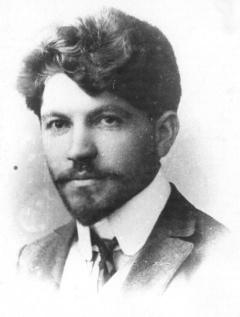
Death of Alexander Bekzadian (August 1, 1938)

Like many of his compatriots involved in communism, Alexander Bekzadian came to believe that socialism (morphed into communism) was the only salvation for Armenians, and did not view the issue of the Armenian liberation struggle as such. Led by the winds of world revolution, they called upon Armenians to fight against world imperialism along foreign socialists.

Bekzadian was born in 1879 in Shushi, the capital of Artsakh (Gharabagh), in the family of a judicial officer. Family well-being allowed him getting a brilliant education. In 1897 he graduated from the Royal School of Shushi, one of the best educational institutions in Transcaucasia at the time, and entered the School of Agriculture at the Polytechnic Institute of Kiev. In 1901 he became a member of the Social-Democratic organization of the University of Kiev, and two years later, the Bolshevik fraction of the Russian Social-Democratic Party. He was expelled from the university and the city for his political activities. He went straight to Baku, where his family had moved, and continued his activities within the local Bolshevik committee. His was a family of heightened political engagement; his sisters Mariam and Elena would later adopt the ideas of the Russian revolution, two of his brothers, Tigran and Hovsep, would be ARF members, and Ruben, member of the Social-Revolutionary party. 

In 1905 he was arrested and imprisoned. However, he escaped and became an exile in Switzerland from 1906-1914 with an active political life as a sort of linchpin between the Caucasian Bolsheviks and the leader of the party, Vladimir Lenin. He entered the Law School of the University of Zurich, where he defended his doctoral dissertation in 1912.
Bekzadian was allowed to return to Russia in 1915, but was arrested when he rushed to Baku and remained in jail until the Russian Revolution of February 1917. After being released, he went back to Baku, where he became president of the provincial Food Committee. In 1918 he moved to the northern Caucasus and the following year he was a member of the Caucasian Committee of the Bolshevik Party. He was actively engaged in the struggle against the “bourgeois” Republic of Armenia and became one of the organizers of the failed Communist uprising of May 1920.

Bekzadian was a member of the Revkom, the Bolshevik committee that proclaimed the Sovietization of Armenia, and Popular Commissar of Foreign Affairs and Supplies in the first government of Soviet Armenia. In December 1920 and January 1921 he demanded from the Kemalist government of Turkey to stop the atrocities against the Armenian population in the areas occupied by Turkey and start negotiations to return Kars and Alexandropol to Armenia. However, the Armenian delegation led by Bekzadian was excluded from the negotiations started in Moscow in February-March 1921 by Turkish demand, giving the rebellion of February 1921 as pretext. He was reinstated in his position after the end of the rebellion in April. However, he failed to obtain any meaningful result at the time of the Treaty of Kars, which consecrated the loss of Kars, Ardahan, Mount Ararat, and Ani to Turkey in October 1921.

In 1922 Bekzadian abandoned Armenia and took a secondary position at the commercial mission of the USSR in Berlin for the next four years. From 1926-1930 he was designated deputy president of the Council of Popular Commissars of the Transcaucasian Federation and Commissar of Commerce. Afterwards, he returned to foreign affairs: from 1930-1937 he was Soviet ambassador, first to Norway until 1934, and then to Hungary. He abandoned his diplomatic activities in 1937 and returned to Moscow.

Like many veteran Bolsheviks, Alexander Bekzadian was a victim of the Stalinist persecutions. In 1938 he was charged with being a Trotskyite and having engaged in anti-governmental activities. After months of trial, he was executed on August 1, 1938, at the infamous Communarka shooting ground of the NKVD (a predecessor of the KGB), which functioned from 1937 to 1941 with more than 10,000 people killed and buried there. Like millions of Stalin’s victims, he was posthumously rehabilitated.

Tuesday, February 18, 2014

The February Revolt - February 18, 1921

A New York Times article headline from March 17, 1921
The government of the Republic of Armenia transferred the power to the incoming Armenian Bolsheviks on December 2, 1921, and the first independence came to an end: Armenia became a Soviet republic, nominally independent. The Military-Revolutionary Committee (Revkom) led by Sarkis Kasian arrived in Yerevan on December 6. 
The transference of government and loss of independence had been the choice between the lesser of two evils. On the west, Armenia had been defeated by the Turkish nationalist forces that responded to Mustafa Kemal, which had occupied Alexandropol, and the danger of a new massacre that would complete the genocide loomed over the country. It was expected that the new government, while dealing with the Turks with the sponsorship of Soviet Russia, would also address the myriad of problems that affected the exhausted population. 
This did not happen. The newcomers, instead, caught in the fever of revolution and war communism, tried to apply to Armenia the same recipes that were being practiced in Soviet Russia.  Food was requisitioned from the starving population to be sent to Russia as “help from the Armenian workers.”  Repression against the former government and the Armenian Revolutionary Federation started. In late December about 1,200 high-ranking officers of the army of independent Armenia were arrested, including the heroes of the May 1918 battles, like generals Tovmas Nazarbekian, Movses Silikian, Daniel Bek-Pirumian, and Dro. They were forced to walk from Yerevan to Alaverdi (about 100 miles), and then dispatched to prisons in Baku and Russia; Daniel Bek-Pirumian, hero of the battle of Sardarabad, was shot in the Yerevan prison in February 1921. 
Economic suffering and political violence led to the brewing of a popular movement to put an end to the situation. In February 1921 many prominent A.R.F. members, who had also been active in the years of the Republic, like Levon Shant, Nikol Aghbalian, and Hovhannes Kajaznuni, were arrested. Some of them were killed in prison by Azeri killers armed with axes. Others were saved by the rebellion, which started on February 13 amid a group of refugees from Sasun who had settled on the foot of Mount Aragatz. In the next four days, the rebel forces, now headed by members of the A.R.F. who had eluded persecution, took Ashtarak, Echmiadzin, Garni, and Hrazdan. Yerevan was liberated on February 18 and the Bolshevik-led Military Revolutionary Committee retreated. The rebellion had been helped by the fact that the troops of the XI Red Army had been taken out of Armenia to participate in the sovietization of Georgia. 
On February 18 the independence of Armenia was again proclaimed and the “Committee for the Salvation of the Homeland” took power under the leadership of the last prime minister of the independent Republic, Simon Vratzian. It issued an order that stated: “The Bolshevik regime in Armenia has been eliminated. Until the formation of a government, the whole authority is in the hands of the Committee for the Salvation of the Homeland.” A message to the delegation of the Republic of Armenia and to the leaders of the world powers, sent on the same day, remained unanswered. A response to a message sent to Georgia was received on February 21, when the Armenian embassy was reopened in Tiflis. However, four days later Georgia fell to the Soviet forces, and the rebellion in Armenia was left alone against the Communist forces. There was no help from the outside world, because it was obvious that the rebellion would fail sooner or later; the Soviet forces in Armenia had the support of Soviet Russia. 
Bloody battles took place between the opposing sides during the short-lived period of freedom. The Bolsheviks attacked Yerevan on February 27, but were forced to retreat on March 1. After a two-week stop, they attacked again and briefly took Ashtarak, but were repelled on March 17. However, the numerical superiority of the Bolsheviks became crucial. Their great offensive started on March 24 and nine days later, on April 2, Yerevan fell. 
The A.R.F. forces retreated without opposing serious resistance to avoid the destruction of the capital. Thousands of people, both civilians and soldiers, retreated to Zangezur, where the Republic of Mountainous Armenia had been formed, and joined the forces of Garegin Nzhdeh. The resistance ended in July, while the refugees and the leaders of the rebellion had already crossed the border to Persia. 
The reasons of the revolt were later discussed by the Bolshevik authorities in Russia and the Military-Revolutionary Committee was replaced in April 1921 by the Council of People’s Commissars, led by Alexander Miasnikian until his death in 1925, whose policies ensured a more tolerant treatment of the population, the end of the rebellion, and the partial return of some of the refugees from Persia.