Tuesday, January 16, 2018

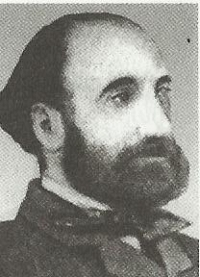
Birth of Mateos Zarifian (January 16, 1894)

Armenian literature in the nineteenth and twentieth century had a host of names who were victims of a disease that was considered incurable until a vaccine was introduced in the 1920s: tuberculosis.

Poetry and tuberculosis had a link of sorts. Four talented Armenian poets, among others, died from the disease without reaching the age of forty: Bedros Tourian (1851-1872), Vahan Terian (1885-1920), Misak Medzarentz (1886-1908), and Mateos Zarifian (1894-1924).

Zarifian, the less known of the four, was born on January 16, 1894, in the neighborhood of Gedik Pasha (Constantinople). He spent his childhood and youth in Scutari. He studied at the school of Ijadieh, the Robert College, and the Berberian School, which he finished in 1913. He was an active sportsman and earned prizes in the Armenian Olympic games organized in Constantinople (1912-1913)

He went to Adana to work as a teacher of English and physical education at the local Armenian school. The first symptoms of tuberculosis, a strong chest pain, appeared at that time. In 1914 he interrupted his work and went to Lebanon, hoping that the mountainous air would help cure him. At the beginning of World War I, he was drafted into the Ottoman army. While studying at the school of non-commissioned officers, his unruly behavior landed him before a military tribunal, which sentenced him to exile. However, some influential interventions helped commute this sentence to long-term prison. Some months later, he was freed and started serving at the military hospital as a male nurse.

After the armistice of Mudros (1918), Zarifian went to the interior as translator for the British army to participate in the task of gathering Armenian survivors. Between 1919 and 1921 he worked at his alma mater, the Berberian School, as teacher of English and physical education. His illness prompted him to pour his life experience into literature. In 1919 he started publishing poems in the daily Jagadamard. His poetry reflected a hopeful approach to life and death, and his love poems disclosed the melancholic overtones of his soul, “Ah! The superb poem of my soul,/ Of my ruined, destroyed soul…”

He published two volumes of poetry, Songs of Grief and Peace (1921) and Songs of Life and Death (1922), which were critically acclaimed. His long battle with tuberculosis came to a critical point after 1922. Zarifian, the last representative of Western Armenian poetry, passed away on April 9, 1924, at the age of thirty.

Thursday, January 11, 2018

Death of Henri Verneuil (January 11, 2002)

Prolific filmmaker Henri Verneuil was one of the well-known names in French cinema for forty years, and closed his cinematographic career with two autobiographic films that narrated the Armenian experience.

He was born Ashod Malakian on October 15, 1920, in Rodosto, Turkey. The Malakians emigrated from their hometown in 1924 as a result of Turkish anti-Armenian persecution in the years after the genocide and settled in Marseilles (France).

Young Ashod graduated from the French lyceum in Aix-en-Haute and entered the École Nationale d’Arts et Metiers in Aix-en-Provence (1942). Upon graduation in 1944, he put aside his technical diploma and started working as a journalist. In 1945 he wrote an article about the Armenian genocide and the editor suggested he adopt a French name to make it look more objective. Thus, Henri Verneuil was born.

In the postwar, Verneuil entered the world of cinema. He directed his first short film in 1946 and moved to Paris in 1949, where he became an assistant director. In 1951 he directed his first feature, the black comedy The Hunting Ground. His second film, the drama Forbidden Fruit (1952), won him international acclaim. Both films featured the great French comic actor Fernandel in the main role. The same actor played the six main roles (a father and his five sons) in The Sheep Has Five Legs (1954), which earned the first prize at the Locarno International Film Festival and an Oscar nomination for best script to Verneuil in 1955. Verneuil’s biggest hit, before the New Wave of the 1960s, was The Cow and I (1959), once again with Fernandel.

Later he also directed other movie stars including Jean Gabin, Alain Delon, Lino Ventura, Jean Paul Belmondo, Yves Montand, and Michele Morgan. In the 1970s he directed a few films in English with Anthony Quinn, Yul Brynner, and Henry Fonda. His last commercial film was in 1984.

Afterwards, the veteran filmmaker would focus on his Armenian heritage. In 1985 he published an autobiographical work, Mayrig, which recounted his childhood and the Armenian experience in Marseilles. It would become the basis for his two last films, Mayrig (1991) and 588, rue Paradis (1992), featuring Omar Sharif and Claudia Cardinale. In 1988 he had directed the video clip of “Pour toi, Arménie” (For You, Armenia), the song composed by Charles Aznavour and Georges Garvarentz to the benefit of the victims of the 1988 earthquake in Armenia. 

In 1996 Verneuil, who had earned the French Legion of Honor in 1955, was awarded an honorary César, France's equivalent of the Oscar, for lifetime achievement in film. He was elected a member of the Academy of Fine Arts in 2000. He died in Bagnolet, a suburb of Paris, on January 11, 2002. Two of his children, Patrick Malakian (a TV director) and Gaya Verneuil (an actress), followed in his steps. Several streets and squares in France and Armenia bear his name.

Thursday, January 4, 2018

Death of Stepan Lisitsian (January 4, 1947)


Stepan Lisitsian was a pioneering name in several fields at the turn of the twentieth century. He is particularly remembered for his work as an educator and ethnographer.


He was born on September 22, 1865, in Tiflis, in a doctor’s family. After graduating from the Russian gymnasium (high school) in 1884 with highest grades, he entered the school of History and Philology of Odessa University (Crimea) the following year. After a year, he moved to the University of Warsaw and graduated in 1889. From 1889-1891 he taught Russian literature at the Gevorgian Lyceum of Holy Etchmiadzin, but he was fired by an order from Catholicos Makar I for leading student agitations against the administration.


Lisitsian moved back to Tiflis. He contributed to the journal Taraz, and was its de facto editor in 1892-1893, when editor in chief Tigran Nazarian was abroad. In 1894 he was hired as teacher at the Nersessian School, where he taught Armenian history, general history, and Russian geography at different times until 1915.


Meanwhile, in 1904 his request to the authorities to publish a magazine for children was refused due to his questionable background. In the end, a year later Hasker appeared, formally under the editorship of Lisitsian’s wife Ekaterina. The magazine gathered the best Armenian writers, illustrators, and scientists, including names like Hovhannes Tumanian, Avetik Isahakian, or Atabek Khenkoyan, and actually the first true magazine for children in the Armenian press. Stepan Lisitsian became the editor in 1913 and continued the magazine until 1917 (it had a short revival in 1922).


Lisitsian worked in the pedagogical field for almost 60 years. Besides the publication of Hasker, he wrote textbooks, curricula, and specialized studies. The textbook Lusaber (“Daybreak”), which he authored with Tumanian and Levon Shant, was particularly popular. He also traveled to Russia, Switzerland, France, and Germany to study new teaching methods. In 1911 he turned his wife’s elementary school into a middle school and then a high school, of which he became its principal in 1924, when the school was dissolved. He moved to Yerevan in 1924 and became a university professor, and from 1938 he also taught at the Pedagogical Institute.


Lisitsian, who knew several Western languages, was also an accomplished and prolific translator, literary scholar, and polemicist. Among his many works, he translated Henrik Sienkiewicz famous novel Quo Vadis ? from the Polish original. He is also particularly remembered for his extensive work in the field of ethnography, especially since the 1920s, and geography. He gathered much material during fieldwork and wrote pioneering studies on different ethnographic areas of Armenia. In 1928 he became the head of the section of Ethnography in the State Museum of History. He wrote an important textbook on physical geography of Armenia in 1940 and was the author of an “ethnographic questionnaire,” published in 1946, that became a guide for scholars in the field for many decades. In 1945 he was honored with the title of Emeritus Worker of Science of Soviet Armenia and decorated with the Order of the Red Banner of Labor.

Lisitsian passed away on January 4, 1947. A school in Yerevan carries his name, as well as the ethnographic section of the Museum of History of Armenia. 

Friday, December 22, 2017

Death of Mekertich Armen (December 22, 1972)

Mekertich Armen was a less known, even though well-regarded member of the generation of Armenian intellectuals that became victim of Stalinism.

He was born Mekertich Harutiunian on December 27, 1906, in Alexandropol (nowadays Gumri), in a family of artisans. He studied in a local school and then in the gymnasium for boys and in one of the schools opened by the Near East Relief in the city. Years later, he would graduate from the State Institute of Cinematography in Moscow, where he studied at the section of script writing for two years.

In 1922-1923 he was a boy scout (scoutism was still tolerated in Soviet Armenia in the early 1920s), and in 1923 published his first poem in the local newspaper Panvor . In 1925 Mekertich Armen was one of the founding members of the short-lived “October” union of writers of Leninakan (Gumri’s name in Soviet times), started by Gurgen Mahari (1903-1969) along with Soghomon Tarontsi (1904-1971), Gegham Sarian (1902-1976), Sarmen (1902-1980), and others. In 1925 he moved to Yerevan and entered another short-lived union of writers, called “November” and founded by Yeghishe Charents (1897-1937). He worked for a few years in the editorial offices of the journals Grakan Dirkerum and Yeritasard Bolshevik . He would also be the secretary of the artistic council of Haykino (the Armenian film studios, later known as Armenfilm).

By 1934, when he became a member of the newly founded Writers Union of Armenia, Mekertich Armen had already published several books of prose, among them the novels Yerevan (1931) and Scout 89 (1933).  His remarkable novel The Fountain of Heghnar (1935), set in pre-Soviet times, put him among the best writers of his generation.

However, the political purges that swept the Soviet Union in 1936-1938 did not spare the political and intellectual class of Armenia. Along with many members of his generation (Charents, Axel Bakunts, Gurgen Mahari, Vagharshag Norents, Soghomon Tarontsi, among many others), Mekertich Armen was arrested in 1937 as an “enemy of the people” (the usual slogan of authoritarian and totalitarian regimes to tarnish its potential and real opponents) and exiled to a labor camp, where he remained until 1945.

Upon surviving the hardships of exile, he returned to Yerevan and continued his literary activities. He published new novels and collections of short stories, but none repeated the success of The Fountain of Heghnar, which had been printed twice before his arrest and had three more editions from 1955 to 1961. In the short interlude of Nikita Khruschev’s period of the “thaw,” when the crimes of Stalin were denounced and some works reflecting the Siberian labor camps were allowed to be published, Armen published a collection of short stories, They Asked Me to Deliver to You (1964), that brought some recognition once again. In the last years of his life, he was named Emeritus Worker of Culture of Soviet Armenia (1967) and his collected works were published in five volumes (1967-1971). The Fountain of Heghnar was the subject of two films (“The Fountain of Heghnar,” Arman Manarian, 1971, Yerevan, and “The Spring,” Arby Ovanessian, 1972, Iran).

Mekertich Armen passed away on December 22, 1972, in Yerevan.

Thursday, December 14, 2017

Birth of Stepan Voskan (December 14, 1825)

French culture played a very remarkable role in the development of Armenian intellectual life in the nineteenth century. One of its best representatives was journalist and writer Stepan Voskan (Voskanian).
 
Voskan was born on December 14, 1825, in Smyrna (Izmir), the second city of the Ottoman Empire, which would also become an important hub of Armenian cultural life. He studied at the local Mesrobian School, where he taught after graduation. In 1846 he went to Paris to continue his studies. He was already well-versed in French and took some courses at the Collège Sainte-Barbe, where he also tutored foreign students. At the same time, he followed studies at the Conservatoire des Arts et Métiers (for technical subjects) and the Collège de France (for liberal arts).

In 1847 he started contributing to the Parisian periodicals National and Réforme, and took part in the French Revolution of 1848. The twenty-three year old student was a speaker at the barricades, as well as an active participant in the occupation of the royal palace: “Yes, we were with those who rebelled against Louis Philippe,” he wrote in 1859, “yes, we did what every man had to do for freedom and we had the honor of entering the Tuileries arms in hand.” In June 1849 he participated in a student protest against the war with Italy and, as a result, he was arrested and spent two months in prison. Months later, he graduated from Sainte-Barbe, and until 1852 he followed courses at the medical school and the School of Social Sciences of the Sorbonne.

The ideals of social justice and human rights, coupled with Auguste Comte’s positivism, had forged Voskan’s world when he returned to the Ottoman Empire in 1852. He settled first in Constantinople and then in Smyrna, where he took a position as principal and teacher. He championed the ideas of national awakening and education, as well as freedom, and was an implacable critic of public affairs: “A moral and material wound must be disclosed in order to be cured.” He published two pseudonymous pamphlets (1853-1854), where he condemned retrograde clergymen and Catholic mistaken views about the Armenian Church. He was persecuted and lost his job; as a result, he returned to Paris, where he briefly published the journal Arevelk (1855-1856). His views revealed controversial once again, and he lost the support of his wealthy sponsors.

After tutoring students for three years, Voskan published another journal, Arevmudk, in 1859, where he continued espousing his progressive views. After Arevmudk had to cease publication due to relentless opposition, he went to Italy. In Turin he was a contributor to the French newspaper L’Italie and attracted the attention of the famous Italian statesman, Count of Cavour (1810-1861), who had him tutoring his son from 1860-1861. Voskan would later resume the publication of Arevmudk (1864-1865) in Paris, again to meet a bitter end. Afterwards, he would abandon the Armenian language as a medium of expression. Paradoxically, he had been a champion of Modern Armenian and his writing and translations from French had greatly contributed to its development.

The journalist returned to his birthplace in 1866. He worked as principal and French teacher at the Mesrobian and Hripsimian schools, and published the French newspaper La Réforme (1867-1901). He published two pamphlets in French in 1878-1879, where he criticized the views of contemporary Armenian philosopher Kalust Gosdantian, another follower of Comte, and French philosopher Émile Littré.

Little is known about the last years of Stepan Voskan, who passed away in a hotel in Smyrna on February 23, 1901, in dire straits. His views would remain controversial even after his death. Nevertheless, many of them have passed the test of time and are still relevant to this day. 

Wednesday, December 13, 2017

Birth of Valery Bryusov (December 13, 1873)

Valery Bryusov was one of the leading names of Russian poetry at the beginning of the twentieth century, and he would become especially involved with Armenia and the Armenians in the 1910s.

The future poet was born on December 13, 1873, into a merchant’s family in Moscow. His parents had little to do with his upbringing, and Bryusov was largely left to himself as a child. He was a voracious reader of everything that fell into his hands, including the works of Charles Darwin and Jules Verne, as well as various materialistic and scientific essays. He received excellent education and studied in two Moscow gymnasia from 1885-1893. Then he went to Moscow State University from 1893-1899.

Bryusov was still a university student when he started his literary career in the early 1890s. He translated poetry by the French Symbolists (Paul Verlaine, Maurice Maeterlinck, and Stéphane Mallarmé) and Edgar Allan Poe. He also began publishing his own poems, which were influenced by the literary movements then in fashion in Europe, Decadentism and Symbolism.

In order to give Russian Symbolism a dimension that it still did not have, Bryusov made recourse to a mystification. Thus, he published three volumes of his own poetry, entitled Russian Symbolists: An Anthology (1894-1895), with different pen names. The trick proved successful and attracted several young poets to the ranks of Symbolism.
Bryusov became an authority after the appearance of his fourth collection of poetry (1900). The celebration of sensual pleasures and the mastery of a wide range of poetic forms characterized his poetry, which he published in several more collections until 1921. His editorship of Vesy (The Balance), an influential literary magazine, from 1904-1908 consolidated his position in the Russian literary world. Among his eighty books, he also had historical novels, short stories, plays, essays, and translations.

As a translator, Bryusov was the first to render the works of Belgian poet Emile Verhaeren into Russian. He also translated works by Victor Hugo, Jean Racine, Lord Byron, Oscar Wilde, Johann Goethe, Virgil, and others. On this basis, in June 1915 the Armenian Committee of Moscow approached him with a proposal to work on an anthology of Armenian poetry. Bryusov researched all bibliography available in several European languages, and fell enamored of Armenian literature. In his superb introduction to Armenian poetry from the Earliest Times until Our Days , published in 1916, he wrote: “While studying Armenia, I found an inexhaustible source of spiritual and sublime pleasures… As a historian, as a man of science, I saw in the history of Armenia a whole original world, whose thousands of interesting, complex questions raised scholarly interest, and as a poet, as an artist, I saw a similarly original world in Armenian poetry, a new and yet undiscovered universe, where high-valued productions of true literary creation glittered and shone.” He also studied the Armenian language for several months and wrote a monograph, The Annals of the Historical Fate of the Armenian People. In January 1916, once the preparations for the anthology were basically finished, Bryusov departed to the Southern Caucasus to get acquainted with Armenian reality and introduce his work to the public. He sojourned in Baku, Tiflis, Yerevan, and Etchmiadzin, where he gave very successful lectures about Armenian history and poetry, and read from among his more than 170 translations from more than 40 Armenian poets.

Bryusov would become the first author to introduce Armenian poetry in such a comprehensive way to the Russian audience. Most of his translations still keep their freshness a century later. He also wrote a series of poems dedicated to Armenia, and even planned to prepare an anthology of Armenian prose from the fifth to the twentieth century. In 1923 he was named popular artist of Soviet Armenia for his work on the anthology.

In the 1910s, Bryusov’s reputation gradually declined, as his poetry began to seem cold and strained to many of his contemporaries. Unlike many fellow Symbolists, he remained in Russia after the revolution of 1917. He supported the Soviet government and earned a position in the cultural ministry of the Soviet Union. He helped draw up the proposal for the Great Soviet Encyclopedia. He became the head of the Chamber Book of Moscow, and later of the scientific libraries and the literary section of the Commissariat (ministry) of Education of Soviet Russia. In 1921 he founded the Higher Institute of Literature and Art, which was named after him in 1923, and was its rector. There, he also taught various subjects: history of Russian and ancient literatures, metrics, comparative grammar of Indo-European language, and even history of mathematics. His collections of poetry published after the Soviet revolution marked him as one of the founders of Soviet literature.

Bryusov passed away on October 9, 1924, in Moscow. The Yerevan State Pedagogical Institute of Russian and Foreign Languages (now Linguistic University), founded in 1935, was named after him in 1962.

Friday, December 1, 2017

Death of Tigran Yergat (December 1, 1899)

A short-lived and forgotten name of Armenian letters and political struggle in the late nineteenth century, Garabed Bilezikji was born in Constantinople from a Catholic family of amiras (upper class merchants) in 1870. His father died at the age of 28 and his mother, who belonged to the well-to-do Tingir family, returned to her father’s home with her children.

Little Garabed was given private lessons of Turkish and Armenian, and learned Greek through his nanny. In 1880 he moved to Paris with his mother and entered the boarding school of the Dominican fathers in Argueuil. He graduated in 1887 with honors. After spending a year in the United States, where he studied American literature and perfected his English, he came back to Paris in 1889 and took a modest position at a bank, while devoted to literary and political activities, and adopted the pseudonym of Tigran Yergat.

He maintained close relations with Emile Zola, Jean Jaures, Maurice Barres, and other remarkable figures of French intellectual life, which opened the doors of the press to him. He published many articles in French journals about the peoples of the Orient, Oriental life and customs, and the Armenian Question. He contributed to Nouvelle Revue, Le Figaro , and other publications, and was a much-sought lecturer.

In 1893 the Tingir family lost most of its fortune due to the economic crisis in Turkey, and Yergat was forced to return to Constantinople. He taught French and clandestinely contributed to Revue des Revues with patriotic poems by Kamar Katiba in French translation and articles denouncing the anti-Armenian policies of Sultan Abdul Hamid II. He also wrote articles calling for revolutionary action in the newspaper Hairenik of Constantinople. In August 1896, when the Armenian Revolutionary Federation executed the occupation of the Ottoman Bank, Tigran Yergat’s brother, Mardiros Bileziji, a bank employee, was persuaded by the leaders of the group, Armen Garo and Hrach Tiryakian, to write in Turkish the famous warning to the sultan by the Armenian revolutionaries. Yergat would tell his mother: “They entered the bank like heroes, but they should have exploded the building rather than leaving it like that, without any result. Would my brother have been lost there? Who cares, it would have been for the glory of Armenia…” 

Tigran Yergat also showed his capacities for political and lobby efforts. He was in close contact with Patriarch Mateos Izmirlian (1892-1896), who was finally exiled to Jerusalem by Hamid due to his continuous protests against the “Red Sultan.” He also was the subject of persecution, which forced him to leave Constantinople in October 1896 with help from the secretary of the British embassy.

He went to Greece, where he would mostly spend the next years. He actively cooperated with the Crete rebellion of 1897 and the subsequent Greek-Turkish war, becoming a member of the political organization “Eteria” and working to create a rapprochement between Greek and Armenian revolutionaries. In 1898 he took upon himself the organization of a French military expedition to Cilicia, which remained unfinished due to his death. In fact, his health took a fast turn to the worse early that year. He was forced to move to Cairo, near his brothers, looking for a recovery. During his short sojourn in Egypt, he became a member of the A.R.F.

However, in the spring of 1899, upon his mother’s entreaties, Tigran Yergat returned to Constantinople, physically devastated. He was taken to the hospital, where he passed away on December 1, 1899. An obituary published in the A.R.F. organ Droshak stated: “The storm of revolution, the adoration of epic feats existed in Tigran Yergat as an embodiment of protest, framed within a tender smile. Alas! A wild disease, tuberculosis, destroyed that kind and honorable life.”