Showing posts with label Mekhitarists. Show all posts

Friday, October 25, 2019

Birth of Fr. Hagopos Dashian (October 25, 1866)

The Viennese branch of the Mekhitarist Congregation, founded in 1811, has been remarkable for its erudition, as reflected in its publications and particularly its journal Handes Amsorya, which has been continuously published for over one hundred and thirty years since 1887. One of the main names of that “golden age” of the Vienna Mekhitarists was Fr. Hagopos Dashian, who enriched Armenian Studies with his important publications over a span of forty-five years.

Born Franciscus Tashjian in the village of Ardzati, in the province of Karin (Erzerum), on October 5, 1866, he learned the first letters in the parochial school of Erzerum. In 1880 his parents sent him to the seminary of the Mekhitarist monastery in Vienna. Three years later, he took the vows as a novice and adopted the name Hagopos, and in 1885 became a member of the congregation. In 1889 he finished his studies and was consecrated priest. In the same year, he became a teacher of philosophy and Armenian language at the monastery. After signing his first works as “Tashjian,” in 1890 he adopted the Armenian surname Dashian.

An iron will of learning endowed Fr. Hagopos Dashian with comprehensive knowledge of the Armenian language, as well as history, geography, and literature. This included a well-rounded command of almost a dozen ancient and modern languages. As his younger colleague, Fr. Nerses Akinian wrote, “he did not go to schools of higher education, but his knowledge bewitched university lecturers and professors.”

From 1893-1909 he visited Venice, Berlin, Constantinople, Smyrna, and Erzerum. From 1909-1912 he was the abbot of the Mekhitarist convent of Constantinople. Returning to Vienna in 1912, he was a member of the Administrative Council of the congregation.

At the age of twenty-five, in 1891, he published the catalog of manuscript of the Royal Library of Vienna, followed by the catalog of manuscripts of the Mekhitarist Congregation of Vienna (1895), which he compiled in two years, including 571 manuscripts with detailed information of encyclopedic character about each unit. The mode of cataloging received the name of “Dashian style” in Armenian philology.

Two years later, in 1897, he completed and prepared for publication the study on the Armenian Divine Liturgy, compared with the Greek, Syrian, and Latin liturgies, which his predecessor Fr. Hovsep Katerjian had left unpublished.

After that, he took over the publication of another unpublished work written three decades before, Fr. Kerovpe Spenian’s Study of the Armenian Classical Language. To this end, he submerged himself into a study of the origins of the Armenian people and many historical and linguistic issues related to it. This resulted into the publication of the 700-page book in 1920, with a posthumously published continuation, Hittites and Urartians (1934).

Dashian was an indefatigable researcher, publishing studies on Agatangeghos (1891), the Life of Alexander by Pseudo-Callistenes (1892), Armenian paleography (1898), authors of the early centuries of Armenian literature (1898 and 1901), and many other issues. He translated into Armenian books by eminent foreign scholars of Armenian Studies, such as Heinrich Hübschmann, Heinrich Petermann, Paul Vetter, Friedrich Müller (from German), Frederick Conybeare (from English), Nikolai Marr (from Russian), and others. He was the point person for any Armenian or non-Armenian scholar who had a query about issues related to the discipline.

The shock that he suffered after learning the fate of his people in 1915 brought him to deal with contemporary subjects too. In 1921 Dashian published a collection of German documents on the genocide in Armenian translation ( The Deportation of the Armenian Nation according to German Documents ) and a demographic study, The Armenian Population from the Black Sea to Karin . The latter was published in French in 1922.

This fecund Armenologist passed away on February 3, 1933, at the age of sixty-six. Fifteen years later, his study The Western Frontier of Ancient Armenia (1948), came out of the presses of the Mekhitarist Congregation.

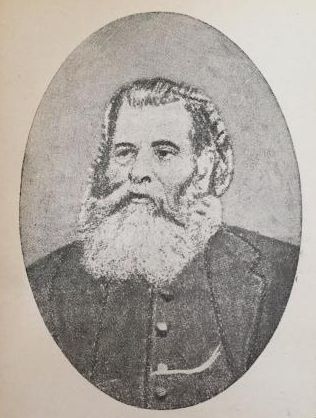
Monday, September 16, 2019

Birth of Dzerentz (September 16, 1822)

Like Raffi among Eastern Armenians, Dzerentz was a popular novelist among Western Armenians whose historical novels, although far removed in time from the present, inspired many with patriotic ideas.

He was born Hovsep Shishmanian on September 16, 1822, in Constantinople, in an Armenian Catholic family. At the age ten, his parents sent him to the Mekhitarist monastery on the island of San Lazzaro (Venice), but after five years of studies, he refused to become a celibate priest, and in 1837 returned to his birthplace. He worked for a few years as a teacher of Armenian language, literature, and history, and in 1843 he traveled to Tiflis, starting a long journey through Eastern and Western Armenia to get acquainted with the places and the people of the homeland. He would later contribute his impressions to Armenian newspapers in Constantinople, adopting the pseudonym Dzerentz ( dzer means “old person” in Armenian).

In 1848 Dzerentz decided to pursue medical studies and departed for Paris, where he studied Medicine at the Sorbonne, while at the same time he taught at the Samuel-Moorat lyceum of the Mekhitarists in Paris. The revolution of 1848 in France, which spread throughout Europe, and the Italian liberation movement had a great impact over the future writer’s thinking. He made friends with other Armenian students in the French capital, like Krikor Odian, Nahabed Rusinian, and Stepan Voskan, who would have an important role in the “awakening” ( Zartonk ) of Western Armenian intellectual life.

After graduation, Dzerentz returned to Constantinople in 1853 and pursued his professional career, while actively participating in Armenian public life. He wrote articles about educational issues, participated in the preparatory works of the Armenian Constitution passed in 1860, and fought against the confessional disputes that plagued the Armenian Catholic community.

On the eve of the rebellion of Zeitoun (1862), Dzerentz traveled to Cilicia with the aim of working in the educational field and opening an agricultural school. However, he was subject to political persecution and forced to return to Constantinople.

Through Krikor Odian’s intervention, Dzerentz went to work at one of the hospitals of Constantinople as a physician in 1872. Two years later, his wife passed away, leaving him alone with his fourteen-year-old daughter Takouhi. A year later, the intrigues of some French Catholic nuns forced the director of the hospital to fire him. In 1876 the Ottoman government sent him to Cyprus, then an exile area, to work as a doctor.

Two years later, Dzerentz abandoned the Ottoman Empire and moved to Tiflis with his daughter, who had married there. In the last ten years of his life, he would become a very popular novelist, making an important contribution to the genesis and development of the historical novel. In 1877 he had published his first novel, Toros, Son of Levon , about the life and exploits of prince Toros of Cilicia (1145-1169), which enjoyed huge success. Once in Tiflis, he taught at the Nersisian School and in 1877-1878 he traveled to Van, Alashkert, and Basen to bring medical help to the population during the Russian-Turkish war.

Dzerentz published in rapid succession his second novel, Travails of the Ninth Century (1879), which dealt with the rebellion of villager Hovnan of Sassoun against the Arab domination in 852-853, and his third novel, Teotoros Reshtuni (1881), about the situation in Armenia during the Byzantine-Persian wars of the seventh century. The popularity of Dzerentz novels would survive him until our days.

The writer lost his twenty-four-year-old daughter in 1884, and this was a terrible blow for him. His health quickly decayed and he died in Tiflis from a heart attack on February 17, 1888, at the age of sixty-six.


Sunday, February 17, 2019

Birth of Clement Sibilian (February 17, 1824)

The nineteenth century was the time for the rediscovery of the Armenian past, with the two branches of the Mekhitarist Congregation in Venice and Vienna leading the charge. A monk from Vienna, Rev. Clement Sibilian, would become the pioneer of Armenian numismatics.

Born Mgrdich Sibilian in Constantinople on February 17, 1824, he entered the Mekhitarist monastery of Vienna in 1838. He became a member of the congregation in 1842 and was ordained a celibate priest in 1845, taking the name of Clement (Կղեմես in Armenian). He had started learning numismatics in the classes of Abbot Aristakes Azarian, who had begun the collection of coins of the Congregation in 1825. In 1846 he started writing what would be his magnum opus, Classification of Rupenian Coins, but he left the manuscript aside when he understood the lack of primary research in the field. He traveled through Armenia Minor in 1847-1849. In 1851 he published two books of general interest in Vienna: Hernán Cortés or the Conquest of Mexico as Continuation of Christopher Columbus and Terdat’s Isolation, the Last Days, and the Death (the latter was about Armenian king Terdat III). He was in Smyrna from 1853-1855. An attempt to go on a scientific expedition to Cilicia was botched by his superiors’ decision to send him to Constantinople and then, in October 1856, to Persia (Iran), where he spent twelve years at the helm of the Armenian Catholic community in Ispahan. In the meantime, he had started publishing articles on numismatics and antiquities in Armenian and European journals.

Golden coin of King Levon I
During his sojourn in Persia, Sibilian visited Tehran (1857), Tiflis and Echmiadzin (1864). Thus, he got acquainted with both the past of Armenia, his subject of interest, and the present. He returned to Constantinople in 1868 and went out in another field trip to Asia Minor until 1870. Each of his travels was an opportunity to collect coins and other antiquities, which he donated both to the museum of the Congregation and to other European institutions. After a short return to Vienna, he went back to Constantinople, where he started collaborating with all Armenian cultural institutions of the city. He gave lectures in the schools and published a textbook, Brief Geography for Children of Elementary School (1877).

In 1875 Sibilian was designated corresponding member of the Numismatic Society of Vienna as an expert in Greek and Armenian coins. He classified the ancient materials of the Ottoman Museum of Constantinople and in 1876 Sultan Abdul Aziz, in appreciation of his talents, designated him second director of the museum. In late 1876 he finally was able to visit Cilicia, and in April 1877 he was commissioned by the museum to go to Mesopotamia to acquire materials. This trip would prove fatal. Sibilian, physically weakened by continuous traveling, caught dysentery and arrived in a semi-comatose state to Diarbekir, where he passed away eight days later, on May 23, 1878, and was buried.

Shortly before his death, Sibilian had completed Classification of Rupenian Coins, where he processed, classified, and chronologically established for the first time more than two thousand coins of the Armenian state of Cilicia. The manuscript remained in the family until the Mekhitarist Congregation bought it and published it in 1892, in an edition prepared and updated by Rev. Fr. Krikoris Kalemkiarian. In the preface, the editor noted that the Mekhitarists of Vienna possessed a collection of 15,000 coins, including 220 coins from the Arsacid dynasty and 2,232 coins from the Cilician period, thanks to Sibilian’s continuous efforts. A review in the journal Ararat of the Catholicosate of Holy Echmiadzin remarked in 1893: “Here is a book that deserves to ornate the table of each Armenian, if the memorials of his ancestors are valuable to him, if he wants to have a permanent image of those memorials before him.” The Armenian Numismatic Society of California published a commemorative volume in 1980 on the centennial of Sibilian’s death.

Thursday, January 10, 2019

Birth of Serovpe Dervishian  (January 10, 1846)

Very Rev. Fr. Serovpe Dervishian, a forgotten name today, was a pioneer of Armenian linguistics in the nineteenth century, at a time when Armenian had barely found its place as a branch of the Indo-European languages and professional linguists were pretty scarce in Armenian scholarship.

There is not much information about Dervishian’s life. He was born in Constantinople on January 10, 1846, and sent to the Mekhitarist monastery in Vienna, where he received his education and joined the order in 1864 as he took his vows of celibacy. Two years later, he was anointed vartabed.

He first published several books on moral and religious issues, such as The Life of the Saints (1870) in Armeno-Turkish and the translation into Classical Armenian of the Apologies of Justin Martyr (1872). Meanwhile, he also tried his hand at a dramatic piece in Modern Armenian, The Widow Mother and the Only Son (1871).
 
However, Dervishian soon left his literary endeavors to turn to his actual love: languages. At the monastery, he was an avid student of Armenian, classic (Greek and Latin), and modern (German and French) languages. Afterwards, he continued his education at the University of Vienna, where he studied the old languages of Iran (Pahlavi) and India (Sanskrit). Besides them, he was familiar with Ottoman Turkish and Old Persian.

He published his first linguistic work in German, The Old Armenian Ք, in 1877. This book, which was the first in a series of linguistic studies entitled Armeniaca, included an examination of the Armenian letter ք (an aspirated k, as in Քրիստոս/Krisdos “Christ”), the etymology of all words containing this letter, and the transformation this letter underwent in those words in comparison with other languages.

In the 1880s Dervishian moved to Constantinople, where in 1883 he published a series of articles on the Armenian numerals in the journal Yergrakunt, published by writer Yeghia Demirjibashian, examining in detail the origin of Armenian numerical nouns, from “one” to “ten thousand.” Two years later, he published his masterpiece in Armenian, The Indo-European Protolanguage. Here he summarized the most important achievements of Indo-European studies, explained away the issues related to the Indo-European mother language, and referred to the ancient Indo-European civilization and the issue of the localization of its homeland, as well as the history of Indo-European linguistics. In 1887 Dervishian founded the first Armenian linguistics journal, appropriately called Lezoo (“Language”), which he filled from cover to cover, publishing fifteen articles with his signature, and lasted a year. He contributed to the newly founded journal of the Viennese Mekhitarists, Handes Amsorya, where he published a lengthy study on the cuneiforms inscriptions of Persepolis (Iran) in 1888-1889. He still published a few more articles in Armenian newspapers of Constantinople and in Handes Amsorya before his untimely death on January 1, 1892, at the age of forty-six.

Dervishian did not produce a fundamental study that explained a scholarly problem, but mostly minor articles. However, he provided the accurate etymology for a number of Armenian words, and he practically introduced Indo-European studies to the Armenian public. The great linguist Hrachia Ajarian wrote in 1913 that “a concise, portable, accessible, and simple book such as The Indo-European Protolanguage, which summarizes the whole erudition of Indo-European linguistics within it, did not exist then not only in our, but even in all of European literature.” He added that, in his own case, “Dervishian’s book has made a great impression on me; there I took my first steps, there I received my first knowledge of linguistics. Therefore, I do not hesitate to call Dervishian my first teacher.”

Sunday, November 11, 2018

Birth of Mgrdich Avkerian (November 11, 1762)

When he founded the Mekhitarist Congregation in 1701, Mekhitar of Sebastia (1676-1749) envisioned a monastic order that would engage in educational activities. Research and scholarship became an integral part of that project, which would be continued by his disciples and successive generations of monks in both branches of the island of San Lazzaro, in Venice, and Vienna.

Rev. Mgrdich Avkerian (Jean-Baptiste Aucher, in French) would be one of the remarkable names in the generation that came to the fore after Mekhitar’s disciples. He was born in Ancyra (now Ankara), in Turkey, on November 11, 1762, in a Catholic Armenian family. His younger brother Harutiun (Pascal), also a member of the Congregation, would be famous as the Armenian teacher of Lord Byron.

In 1774 their father took young Mgrdich, then twelve, to Venice, where he entered the monastery of San Lazzaro and studied at the monastic school. Upon graduation, in 1786 he was ordained celibate priest. He taught at the monastic school for a decade and then he was sent to Constantinople as a preacher for Catholic Armenians. Back to the monastery after eight years, from 1804 until his death he would hold the positions of adviser for thirty years and of general vicar for twenty years.

Rev. Mgrdich Avkerian was also an extremely prolific scholar, linguist, and translator. He published in twelve thick volumes the monumental Complete Life and Hagiography of the Saints in the Ancient Calendar of the Armenian Church from 1810-1814. This huge work was in Classical Armenian, as well as several religious and moral tracts he published from 1809-1814. However, at least two of the latter, Good Advices (1809) and Medicine of Life, which is Spiritual Medical Book (1810), were written in Modern Armenian, which offers an important resource in the study of the history of the language.

Avkerian made an important contribution to classical scholarship, publishing two works that have only reached us through their ancient Armenian translation. The first one was fourth century historian Eusebius of Caesarea’s Chronicon, whose Armenian translation he published along with his Latin translation in 1818. This was a very valuable historical source about the ancient world, sometimes with unique information. The second was a collection of writings by Philo of Alexandria, an important source from the first century A.D. in the development of the philosophical and theological foundations of Christianity (1826). No less important for Armenian scholarship was the publication of eighth-century author Catholicos Hovhannes Odznetsi’s Discourse against Aphtartodocetians (1807). Aphtartodocetism, also known as Julianism, was a heresy rejected by the Armenian Church and formulated by Julian of Halicarnassus, who suggested that Christ’s body was always incorruptible.

The Mekhitarist monk also translated a flurry of works from Latin to Classical Armenian—krapar was still the literary language preferred by many—including texts by Seneca, Cicero, and St. Gregory the Great. Particularly important among these translations was the Armenian version of fourteenth century author Hayton the Armenian, Fleur des histories de la terre d’Orient (1842).

However, Avkerian’s arguably most celebrated work was the New Dictionary of the Armenian Language, a task that he shared with two colleagues, Rev. Kapriel Avedikian and Khachadour Surmelian. He completed the dictionary from the letter Զ to the end (that is, 30 letters) and supervised the publication in 1836-1837 after the passing of his co-authors. This dictionary, which became the standard source for Classical Armenian to this day, included an enormous amount of entries with corresponding quotations from sources both printed and manuscript. Avkerian was already aware that this dictionary was only available to a limited circle of learned people, and ten years later (1846) he published an abridged version, Pocket Dictionary of the Armenian Language, where he gave the explanations of the Classical Armenian entries in Modern Armenian.  

Monday, January 22, 2018

Birth of Lord Byron (January 22, 1788)

For two centuries, Lord Byron’s Armenian connection has become the stuff of legend, and the fact that one of the greatest British poets took an interest in the Armenian culture to the point of learning the language has been widely discussed.
 
Byron's visit to San Lazzaro by Ivan Aivazovsky

George Gordon Byron was born on January 22, 1788 in London. He spent his childhood in Aberdeenshire. His father, a womanizer mired in debts, died when he was three years old, and he remained under the care of his mother. After his elementary education in Aberdeen Grammar School and a private school in Dulwich, from 1801-1805 he studied in Harrow School, a boarding school in London. In 1805 he went up to Trinity College, in Cambridge, where he spent three years, engaging in sexual escapades, boxing, horse riding, and gambling.

Byron had written poetry since his teenage years, and after he recalled and burned a book called Fugitive Pieces, he published his actual first book, Hours of Idleness, in 1807. It was savagely reviewed in Edinburgh, and Byron responded in 1809 with his first major satire, English Bards and Scotch Reviewers.

As it was customary for young noblemen, Byron undertook a grand tour of Europe from 1809-1811. He avoided most of continental Europe due to the Napoleonic wars, and instead he traveled through the Mediterranean. He went over Portugal, Spain, Albania, and Greece, and he reached the Ottoman Empire, visiting Smyrna and Constantinople. He returned to England from Malta in July 1811.

The next year, Byron became a celebrity with the publication of the first two cantos of his poem Childe Harold’s Pilgrimage, which established him as a leading romantic poet. His last period in England included the production of many works. However, his rising star was darkened by scandal. Various love affairs, including rumors of an incestuous relationship with his half-sister Augusta Leigh, and the pressure of debt led him to seek marriage with Annabella Millbanke in 1815. They had a daughter in the same year, but the marriage did not end Byron’s escapades, but ended in disaster. His wife left him in January 1816 and divorced him. Rumors and debts did not end, and Byron left England three months later for good.

After a few months in Switzerland, Byron wintered in Venice, where he resumed his love adventures with two married women. It was natural, then, that he visited for the first time the monastery of San Lazzaro in November 1816. However, he was not just a random visitor of the Mekharist Congregation. He made his goal to get acquainted with Armenian culture and, more importantly, to study the Armenian language with Rev. Harutiun Avkerian (Pascal Aucher). In a letter of December 1816 to his publisher Thomas Moore, he wrote: “By way of divertisement, I am studying daily, at an Armenian monastery, the Armenian language. I found that my mind wanted something craggy to break upon; and this — as the most difficult thing I could discover here for an amusement — I have chosen, to torture me into attention. It is a rich language, however, and would amply repay any one the trouble of learning it. I try, and shall go on; — but I answer for nothing, least of all for my intentions or my success.”

He collaborated with his teacher in two books: Grammar English and Armenian (1817), an English textbook for Armenians, and A Grammar Armenian and English (1819), a grammar of Classical Armenian for the use of English speakers. Byron also translated from Armenian the Epistle of Paul to the Corinthians , two chapters of Movses Khorenatsi’s History of Armenia, and section of Nerses Lambronatsi’s Orations. The poet’s lyricism would become an inspiration for many Armenian poets of the nineteenth and early twentieth century.

In Venice, Byron also wrote the fourth canto of Childe Harold, and around the same time, he published other poems. He wrote the first five cantos of Don Juan between 1818 and 1820, and continued his work in Ravenna from 1819-1821. He fell in love with eighteen-year-old Countess Teresa Guiccioli, a married aristocrat who abandoned her husband and followed him to Ravenna, Pisa, and Genoa. Living in this city, in July 1823 accepted an offer from representatives of the Greek independence movement and left Genoa for Greece. He first settled in the Ionian Islands and then traveled to the mainland in January 1824.
Byron settled in Missolonghi, in southern Greece, and was entangled in the internal fights of different Greek factions. However, his presence in Greece would draw the increasing active participation of European nations. He sold his estate in Scotland to help raise money for the revolution. When planning an attack on Lepanto, at the mouth of the Gulf of Corinth, Byron fell ill in February 1824. He made a partial recovery, but caught a strong cold in April, and then developed a violent fever, which caused his death in Missolonghi on April 19, 1824. His remains were sent to England for burial in Westminster Abbey, but this was rejected for reason of “questionable morality.” He is buried at the Church of St. Mary Magdalene in Hucknall, Nottinghamshire.

A statue remembers Byron in Athens, and April 19, the anniversary of his death, is honored in Greece as “Byron Day.” A street also bears his name in Yerevan.

Sunday, September 10, 2017

Birth of Fr. Nerses Akinian (September 10, 1883)

Father Nerses Akinian was one of the most prolific and renowned names of Armenian philology in the first half of the twentieth century.
 
He was born Gabriel Akinian on September 10, 1883, in Artvin, an area in northeastern Turkey that was part of the Russian Empire at the time. He was sent to the Mekhitarist seminary of Vienna at the age of twelve, in 1895, and entered the Viennese branch of the congregation in 1901 when he was anointed a celibate priest and renamed Nerses. He followed the courses of the University of Vienna, where he studied Greek, Latin, and Syriac, history of Greco-Roman and Byzantine culture, philosophy, and theology. After graduation in 1907, he would have a wide number of functions in the Mekhitarist Congregation for the next decades. He was first a teacher at the seminary (1907) and later its deputy principal (1908-1911) and principal (1916-1920). Along his educational tasks, from 1909 until his death Fr. Nerses Akinian was also the head librarian of the Vienna monastery and the editor, with intermittencies, of Handes Amsorya, the Armenian Studies journal of the Viennese branch of the Mekhitarists. He became a member of the general board of the congregation in 1931 and superior of the monastery from 1931-1937.  
 
From the very beginning, Akinian passionately pursued historical studies, following the general orientation of the Viennese Mekhitarists, and researched the whole extent of Armenian history and literature with German-like rigorousness and method. He was an indefatigable traveler, and would go to many countries to study Armenian culture and gather thousands of Armenian manuscripts and printed books for the library of Vienna. In 1912 he represented the Mekhitarists of Vienna at the consecration of Catholicos Gevorg V Sureniants (1911-1930) and traveled to his birthplace, Artvin, and Eastern Armenia, where he visited Ani, Garni, Geghard, and other ancient places. During World War I, he collected money to help the refugees of the Armenian Genocide, as well as Armenian war prisoners in Germany and Austria.
 
In 1924 Fr. Akinian was assigned to pastoral mission in Soviet Armenia and he would also visit Moscow, Nor Nakhijevan (Rostov-on-the-Don), Batumi, Tbilisi, and Lvov. This gave him the opportunity to visit ancient monuments and research collections of ancient Armenian manuscripts, particularly in Armenia, where he worked at the collection of Holy Etchmiadzin (which would be later moved to Yerevan and became the basis for the collection of the Matenadaran). In 1929 he was arrested, suspected of being a foreign spy, and forced to leave Armenia after a forty-day imprisonment. He went back to Vienna and continued his studies in different cities of Western Europe, including Berlin, Munich, Tubingen, Paris, Rome, and Livorno. In 1939 he went to the Middle East, but remained stranded in Beirut for the next seven years due to World War II. He spent his time teaching at the local Mekhitarist School and studying available Armenian manuscripts. He returned to Austria in the fall of 1946 and spent his last years in Vienna. In 1954 he earned an honorary doctorate from the University of Vienna.
 
Akinian published most of his studies in Handes Amsorya over more than a half century . Many of them were also published in book form. He published more than 40 books related to Armenian medieval literature, Armenian text issues, and Armenian Studies in general. He also compiled catalogues of Armenian manuscripts conserved in collections of Cyprus, Poland, Ukraine, and elsewhere. He discovered and published works by fathers of the Church and various early Christian authors (John Chrysostom, Pseudo-Dionysus the Areopagite, Irenaeus, Ephrem the Syrian, Proclus, and others). Some of his studies on Armenian ancient authors, like Koriun, Movses Khorenatsi, Yeghishe, Ghazar Parpetsi, and others, became controversial due to his penchant to accommodate their texts and chronologies to his views. He passed away on October 28, 1963, in Vienna, leaving more than a dozen unpublished works in the archives of the Mekhitarist Congregation. 

Sunday, July 2, 2017

Death of Ghugas Injijian (July 2, 1833)

Father Ghugas Injijian, geographer and philologist, was a member of the Mekhitarist Congregation of Venice and a prolific author of many valuable works in the first quarter of the nineteenth century.

He was born in Constantinople in 1758. His mother was the sister of another famous Mekhitarist monk, historian Mikayel Chamchian (1738-1823). His father sent him to study in the monastery of San Lazzaro, the headquarters of the congregation. He embraced ecclesiastic life in 1774. After a four-year sojourn in Constantinople (1786-1790), he returned to Venice, where he started publishing his works.

His first publications were in verse: Brief Survey of Ancient and New Geography (1791), also translated into Italian, and partially into French; Byzantine Summerplace (1794), partly translated into Italian and French, which depicted the geography and geology of the Bosporus and Dardanelles Straits. After the publication of Azdarar (1794-1796) in India, Injijian became the publisher of the second Armenian periodical in history, called Darekrutiun (“Annals,” 1799-1802), which was continued by Yeghanag Piuzantian (“Byzantine Times,” 1803-1820). Both were yearbooks, written in Modern Armenian, which contained information about world political affairs, religious, academic, and scientific issues, as well as weather information and predictions.

In 1805 Injijian moved back to Constantinople and continued his activities. In 1806 he contributed a volume on Asia to the Geography of the Four Parts of the World (picture), produced by his teacher Stepanos Agontz, the Abbot of the Venice branch of the congregation.


With the support of the Duzians, a wealthy family of amiras, in 1812 Injijian launched the Arsharouni Society with the goal of promoting books published in Modern Armenian. The Duzians fell in disgrace with the sultan in 1819, and Injijian, fearing for his life, escaped to Odessa, where he remained for a year. The Arsharouni Society was dissolved by the Turkish government, and Yeghanag Piuzantian, which the society sponsored, ceased publication.


After the danger had passed, Injijian returned to Constantinople in 1820, and two years later he published one of his most important works in Venice, Topography of Ancient Armenia, where he presented the historical and geographical picture of Greater Armenia on the basis of a wealth of data gathered from Greek, Roman, and Syriac sources. His work included the description of the geography of the fifteen provinces and hundreds of districts, etymology of place names, ethnographic information, and topographic amendments. This would be followed by the posthumous, three-volume Geographical Archaeology of the Armenian Land (1835), which was the first voluminous work after Chamchian’s History of Armenia to talk about the geography, administrative division, laws, science, arts, ethnography and other issues related to ancient Armenia.

Still, Injijian would produce an eight-volume work called Narration of the Century (Դարապատում), where he offered an abridged history of all countries from 1750-1800, which was published from 1824-1827. The last two volumes were devoted to the history of the development of science and art, as well as the life and work of great thinkers, artists and clergymen.

In early 1828, the Catholic Armenians of Ankara were deported, and Injijian considered it dangerous to remain in Constantinople. He returned to Venice, where he was elected deputy abbot of the Congregation and remained in that position until his death on July 2, 1833.