Showing posts with label Soviet Armenia. Show all posts

Thursday, August 1, 2019

Death of Alexander Bekzadian (August 1, 1938)

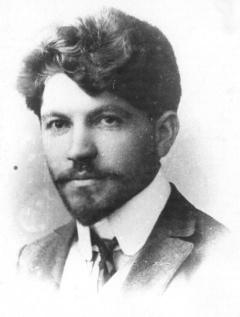
Like many of his compatriots involved in communism, Alexander Bekzadian came to believe that socialism (morphed into communism) was the only salvation for Armenians, and did not view the issue of the Armenian liberation struggle as such. Led by the winds of world revolution, they called upon Armenians to fight against world imperialism along foreign socialists.

Bekzadian was born in 1879 in Shushi, the capital of Artsakh (Gharabagh), in the family of a judicial officer. Family well-being allowed him getting a brilliant education. In 1897 he graduated from the Royal School of Shushi, one of the best educational institutions in Transcaucasia at the time, and entered the School of Agriculture at the Polytechnic Institute of Kiev. In 1901 he became a member of the Social-Democratic organization of the University of Kiev, and two years later, the Bolshevik fraction of the Russian Social-Democratic Party. He was expelled from the university and the city for his political activities. He went straight to Baku, where his family had moved, and continued his activities within the local Bolshevik committee. His was a family of heightened political engagement; his sisters Mariam and Elena would later adopt the ideas of the Russian revolution, two of his brothers, Tigran and Hovsep, would be ARF members, and Ruben, member of the Social-Revolutionary party. 

In 1905 he was arrested and imprisoned. However, he escaped and became an exile in Switzerland from 1906-1914 with an active political life as a sort of linchpin between the Caucasian Bolsheviks and the leader of the party, Vladimir Lenin. He entered the Law School of the University of Zurich, where he defended his doctoral dissertation in 1912.
Bekzadian was allowed to return to Russia in 1915, but was arrested when he rushed to Baku and remained in jail until the Russian Revolution of February 1917. After being released, he went back to Baku, where he became president of the provincial Food Committee. In 1918 he moved to the northern Caucasus and the following year he was a member of the Caucasian Committee of the Bolshevik Party. He was actively engaged in the struggle against the “bourgeois” Republic of Armenia and became one of the organizers of the failed Communist uprising of May 1920.

Bekzadian was a member of the Revkom, the Bolshevik committee that proclaimed the Sovietization of Armenia, and Popular Commissar of Foreign Affairs and Supplies in the first government of Soviet Armenia. In December 1920 and January 1921 he demanded from the Kemalist government of Turkey to stop the atrocities against the Armenian population in the areas occupied by Turkey and start negotiations to return Kars and Alexandropol to Armenia. However, the Armenian delegation led by Bekzadian was excluded from the negotiations started in Moscow in February-March 1921 by Turkish demand, giving the rebellion of February 1921 as pretext. He was reinstated in his position after the end of the rebellion in April. However, he failed to obtain any meaningful result at the time of the Treaty of Kars, which consecrated the loss of Kars, Ardahan, Mount Ararat, and Ani to Turkey in October 1921.

In 1922 Bekzadian abandoned Armenia and took a secondary position at the commercial mission of the USSR in Berlin for the next four years. From 1926-1930 he was designated deputy president of the Council of Popular Commissars of the Transcaucasian Federation and Commissar of Commerce. Afterwards, he returned to foreign affairs: from 1930-1937 he was Soviet ambassador, first to Norway until 1934, and then to Hungary. He abandoned his diplomatic activities in 1937 and returned to Moscow.

Like many veteran Bolsheviks, Alexander Bekzadian was a victim of the Stalinist persecutions. In 1938 he was charged with being a Trotskyite and having engaged in anti-governmental activities. After months of trial, he was executed on August 1, 1938, at the infamous Communarka shooting ground of the NKVD (a predecessor of the KGB), which functioned from 1937 to 1941 with more than 10,000 people killed and buried there. Like millions of Stalin’s victims, he was posthumously rehabilitated.

Saturday, July 20, 2019

Death of Armen Armenian (July 20, 1965)

There was a constellation of names in the history of the Armenian theater at the end of the nineteenth century and beginning of the twentieth, and Armen Armenian was one of the stars of that constellation.

Armen Ipekian, his actual name, was the elder brother of Kaspar Ipekian (1883-1952), who would also become an important figure of Armenian theater and public life in the Diaspora. He was born in Constantinople, where he received his education, on September 10, 1871. He apparently jumped from one school to the other: from the Armenian elementary school in the neighborhood of Pera (Beyoglu) he went to a German school in the same area, then became a boarding student of the Mekhitarist Congregation in Kadikeuy, a student of the school of Ortakeuy, and finally, he graduated from the newly open Central (Getronagan) School.

Newly graduated, he was mesmerized by the great actor Bedros Atamian in 1889-1890, and deeply impacted by his death in 1891. He had to fight against the wishes of his family, which opposed to his theatrical interests, and finally had their consent to perform on the condition of never using the family name. This is how Armen Armenian was born. His first role was in Alexandre Dumas’ “The Dame of the Camellias.

His father wanted him to become a merchant, and sent him to Hamburg, in Germany, in 1894. While taking care of family business, he also watched Eleonora Duse and later, during a trip to Brussels, Sarah Bernhardt’s play. He got in touch with the “divine Sarah” and asked for her assistance. Later, he moved to Paris and entered Sarah Bernhardt theater, where he performed silent roles and became the assistant to the technical director, while following the art of Bernhardt, Mounet-Sully and his younger brother Paul Mounet, and others. He learned theatrical speech and the art of classical tragedy and comedy at Paul Mounet’s private studio in 1895-1897. He later performed at the Bouffes du Nord theater and at the Comedie Francaise.

In 1902 he was invited to Tiflis, where he performed and directed French plays, and then went to Baku as director and actor of the local Armenian theater group. In 1904 he moved to Nor Nakhichevan and formed a theater group, with which he toured the Armenian communities of Northern Caucasus and Russia

By 1908 Armenian had become a well-known director and actor, and joined forces with another recognized colleague, Hovhannes Abelian, to form the “Abelian-Armenian” theater group, which was particularly successful during its five-year run, with Abelian as the spirit of the group and Armenian as the director, with lengthy presentations in the Ottoman Empire, the Caucasus, and Russia. Armenian, who was the first director to stage Levon Shant’s famous play, “Ancient Gods,” was also an accomplished actor in the roles of Yago and Shylock (Shakespeare’s “Othello” and “The Merchant of Venice”), Franz (Friedrich Schiller’s “The Brigands”), Harpagon (Moliere’s “The Imaginary Invalid”), and others.

Armenian continued his theatrical activities in the Caucasus from 1914-1917, and went to Iran from 1917-1921. He returned to the Soviet Union in 1921, and worked in the Northern Caucasus, Baku, Tiflis, Alexandropol (nowadays Gyumri), and other places. He was the director of theaters in Alexandropol and Sukhumi, on the Black Sea shore. From 1935 he worked at the State Theater of Leninakan (Gyumri’s name from 1924-1991), and received the title of Popular Artist of Soviet Armenia in the same year. He staged a total of more than 100 plays in his life, and played about 150 roles. In 1954 he published his memoirs, entitled Sixty Years on the Armenian Stage.

Armen Armenian passed away at the age of ninety-three, on July 20, 1965, in Leninakan.

Friday, May 3, 2019

Death of Grigor Ghapantsian (May 3, 1957)

Grigor Ghapantsian was one of the most influential names in Armenian linguistics and ancient history in the first half of the twentieth century.

Born on February 17, 1887, in Ashtarak, he received his elementary education in his hometown. Afterwards, he went to St. Petersburg, where he was admitted to the Russian gymnasium (high school). After graduation, he entered the section of Armeno-Georgian philology in the Faculty of Oriental Languages of the local university. There, he was a student of the famous Georgian linguist and Armenologist Nikolai Marr.

Ghapantsian graduated in 1913 and returned to Armenia. He became a teacher of Armenian Studies at the Gevorgian Seminary in Holy Echmiadzin, and in 1914 he participated in the archaeological excavations of Ani, led by Marr. In the same year he published his first book, Linguistic Disciplines and Language (in Armenian). When the Seminary was closed in 1917, he settled in Yerevan. In 1918 he participated in the battle of Sardarabad.

In 1921 Ghapantsian was invited to teach at the University of Yerevan, where he worked until the end of his life and directed the chair of General Linguistics until 1954. He taught Classical Armenian, compared grammar of the Armenian language, Urartian, general linguistics, and prepared specialists in those different fields.

In 1932 he was given the grade of professor and in 1942 he earned the doctorate of philological sciences without defending a thesis. In the same year he was designated Emeritus Scientific Worker of Soviet Armenia. He became a founding member of the Armenian Academy of Sciences in 1943 and was elected academician secretary of the section of Social Sciences. He directed the Institute of Linguistics “Hrachia Ajarian” from 1950-1955.

At the time, Ghapantsian was one of the few experts in dead languages of Asia Minor, like Hittite, Urartian, and Hurrian, bringing an important element to the study of Armenian ancient history and language. His most productive period started in the 1930s, when he published several books in Russian and Armenian: Chetto-Armeniaca (1931, in Russian); “Common Elements of the Urartian and Hittite Languages (1936), The Hittitle Gods among the Armenians  (1940), The Historico-Linguistic Meaning of Ancient Armenian Placenames (1940), The Adoration of Ara the Beautiful (1945), et cetera.

Ghapantsian’s linguistic interests, combined with his erudition as a historian and archaeologist, brought him to the forefront of important discoveries in his field. He condensed many of his conclusions in several influential monographs, such as The History of Urartu (1940), Hayasa, Cradle of the Armenians (1948, in Russian), and History of the Armenian Language: Ancient Period (1961). In his studies, he portrayed the existence of two different layers in the Armenian language, one Indo-European and the other local (languages of Asia Minor and the Caucasus). He also dealt with issues of general linguistics, publishing the book General Linguistics (1937, 1939).
Ghapantsian passed away on May 3, 1957, in Yerevan. There is a school named after him in Ashtarak, with a museum dedicated to his scientific career. His bronze bust is placed in the entrance of the central building of Yerevan State University, symbolizing his importance as scholar and teacher in the development of academic studies.

Friday, April 26, 2019

Birth of Leo (April 26, 1860)

Leo was the pseudonym of an Armenian intellectual who produced an amazing output of historical and literary scholarship at the turn of the twentieth century.

Arakel Babakhanian was born on April 26, 1860, in the village of Karintak, near the town of Khankend (nowadays Stepanakert, the capital of Artsakh). In 1878 he graduated from the diocesan school of Shushi. This was the extent of his formal studies, which he would complement with self-teaching. After graduation, he worked in Shushi and Baku as a scribe for notary work, telegrapher, and manager of the “Aror” printing house. 

He was still a student when he started collaborating with the influential daily Mshak of Tiflis in 1877. His views were shaped by the ideological tenets maintained by Raffi, the novelist, and Grigor Artzruni, the founding editor of Mshak. Over the years, he would contribute to a number of publications from the Caucasus to Europe. Initially, he wrote commentary and prose (short story and novel). His most notable literary work was The Daughter of the Melik (1898). He even wrote a historical play, Vartanank, published in 1916.

In 1895 he moved to Tiflis, becoming secretary and contributing editor of Mshak until 1906 . Afterwards, he gradually shifted to scholarship and produced hundreds of articles and dozens of books. First he entered the field of literary criticism, with essays about many contemporary writers, and condensed his views in his monograph The Literary of Russian Armenians from the Beginnings to Our Days (1904). On the other hand, he offered fresh interpretations of many historical issues. He produced a spat of book of history: Armenian Printing (2 vols., 1901-1902), Catholicos Hovsep Arghoutian (1902), Grigor Artzruni (3 vols., 1902-1905), Saint Mesrop (1904), The Armenian Question (1906). After a year of teaching at the Gevorgian Seminary of Holy Etchmiatzin (1906-1907), Leo returned to Tiflis and dedicated himself to scholarship. He produced new books: The Feast of the Armenian Book (1912), The Kingdom of Van (1915), The Documents of the Armenian Question (1915), and the posthumously published Ani (1946). His most ambitious work, which remained unfinished, was the three-volume History of the Armenians, of which he only saw the first volume published in 1916 (the other two volumes were posthumously published in 1946 and 1947). This work of almost 2,000 pages introduced Armenian history from prehistory until the end of the eighteenth century (excluding the 12 th -15 th centuries). While his views were both fresh and sometimes not exempt of controversy, Leo’s works were characterized by an encyclopedic use of Armenian and foreign sources, archaeological, epigraphic, linguistic, and philological materials, travelogues and memoirs, secondary sources, et cetera.

In 1924 Leo moved to Yerevan by invitation of the government of Soviet Armenia and became a lecturer of Armenian history at Yerevan State University until his death. His classes became the first university textbooks of Armenian history, toge
ther with those of professional historian Hakob Manandian. He was given the title of professor in 1925 and became a full member of the Institute of Science and Art of Soviet Armenia (renamed Institute of Sciences in 1930).

While in his pre-Soviet writings Leo gave primacy to the role of the individual and spiritual and geographical factors, in the 1920s he tried to accommodate himself to the new ruling ideology and reversed many of his positions. The genocide appeared to have crushed his views. His work From the Past (1925) offered a picture of the Armenian liberation movement that was completely at odds with his positive approach of his formative years. He repeated his negative evaluation in the two-volume The Ideology of the Turkish Armenian Revolution (1934). In his work The Khoja Capital (1934) he regarded the commercial capital as the moving force of Armenian modern history. 
Leo passed away in Yerevan on November 14, 1932, and was buried in the Yerevan Pantheon. A street and a school in the Armenian capital have been named after him. Leo’s bust has been placed at the central building of Yerevan State University.

Saturday, April 13, 2019

Dismantling of Lenin's Statue (April 13, 1991)

The current Republic Square in Yerevan was called Lenin Square during Soviet times and a huge statue of Vladimir Lenin, the founder of the Soviet Union, was the dominant feature of the square for more than fifty years.

In his blueprints of modern Yerevan, architect Alexander Tamanian located the future statue at the intersection of the square and the city boulevard (currently Vazgen Sargsian Street). At the end of the 1920, a two-meter obelisk was installed at the place with an inscription that marked it as the future location of the statue.

An open competition of projects for Lenin’s statue was launched in 1938. The winners were Sergei Merkurov (1881-1952), Popular Painter of the USSR, and two young architects who lived in Tiflis, the spouses Levon Vardanov (Vardanian) and Natalya Paremuzova.

The monument was designed to have 18 meters of height, including the pedestal. Merkurov refused to have the statue melted in bronze, due to its height (7 meters), and suggested using forged copper. The couple Vardanov-Paremuzova prepared the designs for the granite pedestal with Armenian traditional ornamentation inspired from a khachkar (stone cross) found in Gosh.

The statue was installed on November 24, 1940, on the twentieth anniversary of the sovietization of Armenia. It was considered one of the best representations of Lenin in the entire Soviet Union. The project of Republic Square won the state prize in 1970 թվականին, and architects Vardanov and Paremuzova also received the prize posthumously.

Twice a year, on May 1 (commemoration of Labor Day) and November 7 (anniversary of the October Revolution), the leadership of Soviet Armenia, standing on the three rostrums especially built-in at the pedestal, reviewed the workers’ parade. Every ten years, a wooden attachment was added to the sides of the central rostrum; the fourteen first secretaries of the Central Committees of the Communist Party in the other Soviet republics arrived in Yerevan to participate in the fortieth (1961), fiftieth (1970), and sixtieth (1980) anniversaries of Soviet Armenia. They were preceded by the highest leaders of the country in 1961 (Nikita Khruschev) and 1970 (Leonid Brezhnev). The last such parade happened in November 1988.

After the declaration of independence was approved by the Supreme Council (Parliament) of Armenia on August 23, 1990, and the “Armenian Soviet Socialist Republic” was replaced by the Republic of Armenia, it was only a matter of the time for Lenin’s statue to go. On March 28, 1991, the decision to dismantle the statue was approved at a session of the Municipal Council of Yerevan with two negative votes and four abstentions. It entrusted the executive committee of the Municipal Council to finish the dismantling by April 22. The operation was executed on April 23. A crane carefully severed the head from the body of the statue, with a multitude of people enthusiastically watching one of the symbols of the Communist regime being toppled. Both sections of the statue remained for several years in the courtyard of the National Gallery of Armenia, on the opposite side of Republic Square, and the head was later confined to the deposit of the gallery. The empty pedestal remained on its site until July 1996, when the government of the Republic allowed the authorities of Yerevan to proceed to its dismantling. The remainders of the pedestal are kept at the municipality’s deposit in the neighborhood of Charbakh.

Thursday, March 28, 2019

Death of Alexander Arutiunian (March 28, 2012)

Alexander Arutiunian was born in Yerevan, in the family of Grigor and Eleonora Arutiunian, on September 23, 1920. His father was a military serviceman. He entered the Yerevan State Conservatory’s children’s group in 1927 and was admitted in 1934 to the Conservatory, from which he graduated on the eve of World War II. He wrote his first work, “Impromptu,” for cello and piano, in 1941. After the war he moved to Moscow , where he participated in the workshops of the House of Armenian Culture from 1946-1948 and studied at the Moscow Conservatory, graduating in 1948.

In 1949 Arutiunian was awarded the Stalin Prize for his cantata “Motherland,” a graduation piece he wrote as a student at the Moscow Conservatory. In the same year, he composed the “Festive Overture.” In 1950 he coauthored “Armenian Rhapsody” with Arno Babajanian. He married Irina (Tamara) Odenova and had two children.

He returned to Yerevan and from 1954 to 1991 was the artistic director of the Armenian State Philarmonia. He continued to win acclaim for his works, many of which were inspired by the folk traditions of Armenian music, including the vocal symphonic poem “The Legend about the Armenian People” (1961). In the 1960s he tended towards classical forms and clearer tonality.

Arutiunian wrote a total of thirteen concerts for different instruments, of which the 1950 concert for trumpet made him known in the United States. He composed his concerto for violin and string orchestra “Armenia-88,” inspired by the Spitak earthquake, in 1988.
 He also wrote the opera “Sayat-Nova,” using some of the songs of the great troubadour (1968), the song-cantata “With My Fatherland,” based on the poems of Hovhannes Tumanian (1969), and the vocal series “Monument to My Mother,” based on the poems of Hovhannes Shiraz (1969). 

His prolific production included music for theater and cinema, with the films “The Heart Sings” (coauthored with Konstantin Orbelian, 1956) and “Nahapet” (1977), among others. 
In 1962 he was awarded the title of People’s Artist of Armenia and in 1970 he became People’s Artist of the USSR. Also in 1970 he started teaching at the Komitas Conservatory (Yerevan State Conservatory). He received the title of professor in 1977 and would continue working until 2008. After independence, he was decorated with several medals and orders. In 1987 he was awarded the title of honorary citizen of Yerevan.

He continued producing until his last years. His last work was the “Children’s Album” for piano (2004).

He passed away on March 28, 2012, in Yerevan, and was buried at the Komitas Pantheon.

Tuesday, January 22, 2019

Birth of Arno Babajanian (January 22, 1921)

Arno Babajanian was one of the most important composers of Soviet Armenia, but also was very well-known in the Soviet Union, especially as a brilliant pianist.

He was born in Yerevan on January 22, 1921. His childhood friend, composer Alexander Harutiunian, recalled that at the age of five or six, the future musician attempted to play the old piano of the kindergarten. Babajanian himself used to tell about his first meeting with Aram Khachatourian: “When I was a kindergartener, a man once visited us and asked us to sing to get to know who had music ear among us. I was singing and kicking the floor at the same time. Listening to me, that man said that I should be engaged in music. In the future, I would learn that he was Aram Khachatourian.”

Afterwards, in 1929 Babajanian entered the musical school attached to the Conservatory of Yerevan (now called after Gomidas). In 1930 he wrote his first composition, the “March of the Pioneers,” which poet Yeghishe Charents helped publish. In 1947 he graduated from the Gomidas State Conservatory and the next year he also graduated from the class of piano of the Tchaikovsky State Conservatory of Moscow. Meanwhile, from 1946-1948 he perfected his studies at the studio attached to the House of Culture of Armenia in Moscow. He became a remarkable pianist, who was famous for the interpretations of his own works. Returning to Armenia, Babajanian taught at the Gomidas State Conservatory from 1950 to 1956. Afterwards, he settled in Moscow, where he would live and work until the end of his life.

His natural talent and his vivid musical images turned him into a well-known representative of Soviet music. Babajanian’s style in his formative years was influenced by Aram Khachaturian and Sergei Rachmaninoff, as reflected in his early compositions, the concerts for piano (1944) and violin with orchestra (1949). His monumental “Heroic Ballad” for piano and orchestra (1950) earned him the State Prize of the Soviet Union in 1951, when he was just thirty, showing the main lines of his creative personality along his trio for piano (1952). In 1950 he composed with A. Harutiunian the widely popular “Armenian Rhapsody.” Dramatic contrasts and dynamic musical language characterized his sonata for violin and piano (1959) and the concerto for cello (1962). Many of his piano compositions, such as “Elegy” and “Dance of Vagharshapat,” are frequently chosen by Armenian pianists throughout the world. In 1960 Babajanian received the title of People’s Artist of Armenia and eleven years later he became People’s Artist of the USSR. He won the State Prize of Armenia in 1966 for his innovative composition “Six Images” (1965).

The composer was a very eclectic artist, as he worked in various genres: classical, pop, and jazz. He collaborated with some of the most celebrated Russian poets at the time, like Evgeny Yevdushenko, Andrei Voznesensky, and Robert Rozhdestvensky, but he also composed pop and jazz songs in Armenian, which were very popular at the time. He wrote the music for William Saroyan’s play “My Heart is in the Highlands,” as well as for many celebrated Armenian films: “By the Path of the Storm” (1956), “I Know You Personally” (1957), “The Song of the First Love” (1958, with Ghazaros Sarian as coauthor), “The Bride from the North” (1975), “The Mechanics of Happiness” (1982, State Prize of Armenia in 1983), and others.

Arno Babajanian passed away in Moscow on November 11, 1983. A street in the Armenian capital remembers him, and his statue has been placed near Swan Lake, in central Yerevan.

Sunday, January 6, 2019

Birth of Arpoun Dayan (January 6, 1912)

Dante Alighieri’s The Divine Comedy is one of the jewels of world literature, and as such, it is not surprising that it attracted the attention of Armenian modern writers and translators. We owe its first complete translation to the efforts of an accomplished master of the language, Arpoun Dayan.


Arpoun Dayan was born on January 6, 1912, in Bardizag, near Ismit, in Turkey. He first studied at the elementary school of Makirkeuy, in Constantinople, and then at the Mekhitarist orphanage of Kadikeuy, where his uncle, Rev. Fr. Yesayi Dayetsi (Dayan), a congregation member and a scholar, was the principal.


The Dayan family moved to Italy in 1922, where another relative, Rev. Fr. Ghevont Dayan (1884-1968), a noted scholar of Armenian religious music, lived at the monastery of St. Lazzaro. Arpoun studied from 1923-1927 at the Mourad-Raphaelian College of the congregation, in Venice. After graduation, he moved to Milan.


A new period of his life would start in 1929, when he moved to Soviet Armenia at the age of seventeen. He studied at the one-year pedagogical courses of Yerevan in 1931, and at Yerevan State University from 1932-1933. Afterwards, he went to work for fourteen years as a copyeditor in the newspapers Sovetakan Hayastan, Grakan Tert, Banvorakan Yerevan, and in the literary monthly Sovetakan Grakanutiun, until 1948.


For the next two decades, Arpoun Dayan worked as a professional translator. At the age of thirty-five, in 1947, he published his first translated book, “Hell,” the first part of The Divine Comedy, which would be followed by the next two parts in 1952 and 1959. A full edition of Dante’s masterpiece would come out in 1969. Well-versed in Italian and French, he would also produce translations from Guy de Maupassant (1951, 1961), Honoré de Balzac (1956, 1964), Anatole France (1959), Prosper Merimée (1964), Francois Mauriac (1964), and the memoirs of Benvenuto Cellini (1974).


Dayan returned to editing as a member of the editorial board of the Academy of Sciences of Armenia from 1967-1970. He then entered the academic world, first at the Institute of Art of the Academy from 1973-1977 and then as a junior researcher at the Institute of Literature “Manuk Abeghian.” He published a revised edition of his translation of Dante in 1975 and his study The Poetic Art and the Translation Issues of Dante’s “The Divine Comedy” in 1982. His third revised edition of Dante came out at the beginning of 1983. Three months later, on April 6, this prolific translator passed away in Yerevan.

Thursday, October 25, 2018

Birth of Anton Kochinian (October 25, 1913)

Anton Kochinian was a remarkable, yet underrated figure in the history of Soviet Armenia during the 1950-1970s, despite being in top leadership positions for most of that period.

He was born in the village of Shahali (now Vahagni), in the district of Lori, on October 25, 1913, in the family of an agriculturist. He studied in the local school, then entered the youth organization of the Communist Party (1928) and studied in the school of the organization until 1931. He went to Tiflis to study at the Armenian pedagogical technical school in 1932, but left after a year and he was sent to Yerevan to study at the agricultural school of the youth organization (1933-1935).

After working on the editorial boards of local newspapers from Tavush and Vayots dzor (1935-1937), Kochinian rapidly rose in the party ranks. First he was secretary of the regional committee of the district of Azizbekov (Siunik) from 1937-1939, and from 1939-1940 secretary of personnel and then first secretary of the Central Committee of the Communist Youth Organization. In 1940 he was elected member of the Central Committee of the Armenian Communist Party, and in 1941-1943 he led regional committees in Yerevan and Kotayk.

After spending two years in Moscow as an auditor at the higher school for party organizers, in 1946 he was elected third secretary of the Central Committee of the Armenian Communist Party, and in 1947 secretary of personnel.

In November 1952 Kochinian was promoted to the post of president of the Council of Ministers. He would occupy this position of prime minister for almost fourteen years, during the tenures of Grigori Arutyunov (1937-1953), Suren Tovmasian (1953-1960), and Yakob Zarobian (1960-1966) as the party’s first secretaries. Kochinian was selected by the Moscow leadership to replace Zarobian in February 1966 after the latter failed to contain the demonstrations of April 1965 on the fiftieth anniversary of the genocide.

During his more than two decades both as prime minister and first secretary of the party, Kochinian recorded a series of important achievements. The economic progress of Armenia was backed by an important program of industrialization. This included the construction of chemical factories in Alaverdi and Kirovakan (nowadays Vanadzor), the industrial complexes of Hrazdan and Charentsavan, and factories in Sevan and Dilijan, complemented by railways that ensured transportation of raw materials and production. The “Yeraz” truck factory (1964) in Yerevan and big electronic factories in the city of Abovian were added in this period. Thermoelectric centrals were built in Yerevan, Kirovakan, and Hrazdan, as well as the hydroelectric central of Tatev and the cascade of Vorotan. The construction of the 48 kilometers-long Arpa-Sevan tunnel, which would bring the waters of the Arpa River to Sevan Lake, started in 1963. Kochinian’s active participation was instrumental in the decision to build the nuclear central of Metzamor, started in 1969, which would lead Armenia to energy self-sufficiency. Several thousand hectares of orchards were planted, along the construction of the canal of Aparan and the reservoir of Garni. The Yerevan-Sevan highway and the Kapan-Goris route were also built.
Besides a network of sanatoria, pioneer camps, and tourism areas throughout the republic, the sports complex of Tzaghkadzor, which would be used to train the Soviet winter sports teams, was built in the 1960s, and some important public works in Yerevan started in the early 1970s, such as enlargement of the Zvartnots airport (1973), the Hrazdan stadium (1971), and the Rossiya movie theater (1970). The first steps to build the subway network were taken in 1972.

Kochinian was also instrumental in the inauguration of the genocide memorial of Tzitzernakaberd (1967), the monument of Sardarabad (1968), and the Erebuni museum (1968). The latter coincided with the celebration of the 2750th anniversary of the foundation of Yerevan with great fanfare. He also raised the issue of Karabagh in 1966.
 
During Kochinian’s tenure as first secretary, Soviet Armenia earned three of the five all-Soviet decorations it had throughout its history for reaching high marks in economic activity (1968, 1970, and 1972). Kochinian himself was twice decorated with the order of Lenin.

In November 1974 he was replaced by Karen Demirchyan under pretexts of “serious flaws in leadership” and practically left unemployed. He passed away on December 1, 1990. On the centennial of Kochinian’s birth, two busts were inaugurated in Yerevan and in his birthplace in Vahagni (Lori).

Saturday, July 28, 2018

Death of A. Amatuni (July 28, 1938)

He was simply known as “Amatuni” when he briefly showed up at the top echelons of Soviet Armenia in the 1930s, but his name became infamous for those who are acquainted with the horrors of Stalinism.

As an irony of history, his actual name was Amatuni Vardapetian, so he descended from a doctor of the Church. There were several Bolshevik militants whose last names show a religious connection, and they would become its greatest persecutors.

Amatuni was born on October 24, 1900, in Elizavetpol (Gandzak, nowadays Ganja), in the region of Lower Gharabagh. His biography is relatively sketchy. He became a member of the Communist Party in 1919, and probably at this time he adopted his first name as his last name.

After working in some positions of leadership within the Communist Youth, Amatuni studied at the Institute of Red Professorship in Moscow (1926-1928) and then returned to Armenia, where he was head of the department of propaganda of the Central Committee of the local Communist Party, then secretary of the provincial committee of Yerevan and of the Central Committee itself. He later moved on and from 1931-1935 he worked in Tbilisi and Baku in similar positions.

Meanwhile, the death of veteran Bolshevik Sergei Kirov, assassinated in Leningrad (St. Petersburg) in December 1934, was a signal for the repression of the following years, as it was ascribed to a mythical “right-Trotskyite” center. The latter supposedly responded to Lev Trotsky, who had been expelled from the Soviet Union following his defeat in the power struggle with Stalin. A special committee created during the 20 th Congress of the Communist Party of the Soviet Union in 1956 noted in its report that from 1935-1940 a total of 1,635,000 people had been arrested for anti-Soviet activities, of which 688,503 were shot to death. Almost ninety percent of those arrests happened in the period 1937-1938.
 
Amatuni, a henchman of Stalin’s right hand in the Caucasus, Laurenti Beria, was sent back to Armenia as second secretary of the Central Committee from 1935-1936. The repression started in Armenia with the arrest of Nersik Stepanian, director of the Institute of Marxism-Leninism, in May 1936. Stepanian was charged as the leader of the “right-Trotskyite” center, which supposedly aimed at ending the Soviet rule in Armenia, separating the country from the Soviet Union, and declaring independence, and shot in July 1937. On July 9, Aghasi Khanjian, first secretary of the Central Committee, was summoned to Tiflis for a meeting with Beria and committed “suicide” (many decades later, it was found out that he had been murdered by Beria himself). On the day of his burial, July 12, there was a meeting of the “party active,” where 23 participants declared that Khanjian was a traitor, chauvinist, sponsor of anti-revolutionary elements, and so on and so forth. He was replaced with Amatuni, who unleashed a series of arrests of party members, intellectuals, clergymen, members of the military, et cetera, with false charges orchestrated by Khachik Mughdusi (Astvatzatrian), Commissar (minister) of Internal Affairs.
 
This first wave of repression, which lasted until September 1937, included many former party leaders in Soviet Armenia and even many veterans of the sovietization period in 1920-1921. Many famous writers, like Yeghishe Charents, Axel Bakunts, Gurgen Mahari, Vahan Totoventz, Zabel Essayan, and others were also among those who were summarily condemned to death and shot, died in prison, or were sent to exile in Siberia.
 
The repressors soon became the repressed. The second wave would start with the plenary session of the Central Committee on 20-22 September 1937, with the leading participation of Beria from Tiflis, and Georgi Malenkov and Anastas Mikoyan from Moscow. Amatuni, who had been hailed on September 5 in the party newspaper Khorhrdayin Hayastan as the one who had helped disclose the “wreckers,” was accused of having become the new leader of the “right Trotskyite center” and arrested during the plenary, together with Stepan Akopov, second secretary of the Central Committee, and Mughdusi. He was replaced with Beria’s protégé Grigori Arutiunov, who would last until the death of Stalin and the fall of Beria in 1953.

Nikolai Yezhov, head of the NKVD (the predecessor to the KGB) from 1936-1938, addressed a letter marked “secret” to Stalin on September 22, 1937. He wrote: “Comrade Mikoyan asks to allow shooting a supplement of 700 people with the goal of cleaning Armenia from anti-Soviet elements . . . I suggest to shoot 1,500 people, for a total of 2,000 people including the previously approved number.”  

From 1937-1938, a total of 8,104 people became victim of the repression, including former members of the three Armenian parties (Armenian Revolutionary Federation, Hunchakian Party, and Ramgavar Azadagan Party), and of Socialist parties. The list shows that 3,729 were indicted for anti-Soviet activities, 1,333 for A.R.F. activities, 508 for anti-revolutionary activities, 109 for being Trotskyites, and 9 for chauvinist activities. Almost sixty per cent of the victims of repression (4,530 people) were shot.

Seventy-one of the 106 participants in the “party active” meeting of July 12, 1936, were subsequently liquidated, as well as many executors and witnesses of the crimes committed from 1936-1937. Among them was Amatuni, who was shot in Moscow on July 28, 1938.

Thursday, June 14, 2018

Deportation to Altai (June 14, 1949)

The great wave of repression of 1936-1938, which cost the lives of millions of Soviet citizens, had several thousands of victims in Armenia, including many people who were exiled to Siberia. During and after World War II, a second, less well-known wave would shatter many areas of the Soviet Union, including Armenia.

The preparations, in utmost secrecy, started in January 1949. By command of the Ministry of State Security of the USSR, lists of former Armenian Revolutionary members (Dashnaks), former war prisoners and members of the Nazi-sponsored Armenian Legions, repatriates, and their families were prepared.

On May 28, 1949, the ministry gave the order, and the next day, the USSR Council of Ministers, with Stalin’s signature, approved the “extremely secret” resolution No. 2214-856: “On the transportation, repopulation, and work allocation of those expelled from the Georgian, Armenian, and Azerbaijani Soviet Socialist Republics, as well as the coastal areas of the Black Sea.”

A group of high-ranking officials of the Ministry of State Security arrived in Yerevan, led by Lieut.-Gen Yuri Yedunov, deputy head of the Second General Committee. The latter was well experiences in these matters, since he had managed the expulsion of the so-called families of “bandits and kulaks” of Latvia (28,981 people) on March 25-28 of the same year.

On the night of June 13-14, 1949, the unexpected happened. Both the locals, who already knew the Stalin inferno, and the repatriates, who took pains to get used to the whims of the totalitarian regime, were taken by surprise. Deportations were common as punishment from the 1920s, but they had skipped Armenians so far. That night, 2,754 families (12,300 people) were exiled from all regions of Soviet Armenia to the Altai territory, in the southeast of Western Siberia. Around twelve percent (1,578 people) of the deportees were repatriates. Of those families, the greatest number came from Yerevan (461) and Echmiadzin (182). Interestingly, the massive expulsion had no ethnic grounds; the deportees were known by the label of “Dashnaks.” The targeted repatriates were those with former Greek and Turkish citizenship.

They were sent by train in cargo wagons, and traveled for about two weeks until they were placed in the collective farms and state farms of the Altai region, without knowing why they were moved and what their fault was. The mass deportation was legalized much later, from November 1949-June 1950. A special committee adjunct to the Ministry of State Security prepared documents in the name of the elder of the exiled family or the member of the family who was the cause for exile.

The deportees were told that there was no return and they would stay there until their death. They were warned about leaving their area of residence, which would be penalized with 20 years of prison or forced labor. They had to present themselves once a week at the guard’s office to sign papers that confirmed their presence.

The exiles wrote letters addressed to the highest hierarchy of the country (Stalin, Beria, Malenkov, Voroshilov), as well as Grigor Harutiunian, First Secretary of the Armenian Communist Party, asking for leniency and explaining that they had committed no crime to deserve such a punishment. However, most of the time, those letters were useless, and the response was standard: “Your issue is not subject to review.”

The exiled families were involved in lumbering or farming. Neither their education nor their expertise counted. The repatriates, in particular, had big issues with language, since they mostly did not speak Russian, and this complicated their interactions at work and with the authorities. The children received their education only in Russian.

After Stalin’s death, the life of the exiled had some improvement. They were not allowed to return, but they could make “illegal” movements within the region of Altai, change their residence, find another job, et cetera. The authorities started giving encouraging responses to the letters written after Stalin’s death. A special commission was set up in 1954 to review the cases of the deportees. In the next two years, they were absolved of their “crimes,” and by 1956 the overwhelming majority of the exiled families were back in Armenia.

There is very little documentation about this tragic episode of Soviet Armenian history. It remained totally unspoken until the fall of the Soviet Union. Since 2006, June 14 is commemorated in the Armenian calendar as Day of Remembrance of the Victims of Repression. A memorial complex to the victims of repression during Soviet times was opened in Yerevan on December 3, 2008. Today there are some 6,000 victims of repression from 1937 and 1949, and 8,400 descendants of those victims living in Armenia.

Wednesday, June 13, 2018

Death of Ara Sarkissian (June 13, 1969)

Ara Sarkissian is considered the founder of Soviet Armenian sculpture.
 
He was born in the suburb of Makrikeuy, near Constantinople, on April 7, 1902. He studied at the local Dadian School, and after 1914, when his family moved to the neighborhood of Pera, in the city, he attended the Essayan School. After working menial jobs during the war to make some money, he studied at the local Art School from 1919-1921 and then he moved to Rome to continue studies there, but after half year he entered the Vienna School of Masters (1921-1924). In both schools he already showed progress in sculpture, and the impact of World War I and the Armenian Genocide leaned him towards tragic subjects.
 
Still a student, in 1921-1922 he collaborated in Rome, Vienna, and Berlin in the logistics of the Operation Nemesis, at a time when the liquidations of former Ottoman Prime Minister Said Halim pasha and genocidaires Behaeddin Shakir and Jemal Azmi were being planned. Sarkissian appears as A.S. in the Armenian original of Arshavir Shiragian’s memoirs (1965), although his mention has been eliminated in the English translation. 
 
In 1924 Sarkissian was granted Soviet citizenship in Vienna and the next year he settled in Yerevan, where he would live the rest of his life. In 1926 he organized the Soviet Armenian chapter of the Association of Painters of Revolutionary Russia and was elected its president. Six years later he became the founding president of the Painters Union of Armenia until 1937. In 1945 he became the founding director of the Institute of Art of Yerevan (now the Art Academy of Yerevan) until 1959, and later he was head of chair and director of the atelier until his death.
 
In the 1920s and 1930s Sarkissian’s busts of Armenian writers and intellectuals were characterized by their expressiveness. During World War II, he sculpted busts of Armenian soldiers and various patriotic compositions. One of his best works, the statue of Bolshevik revolutionary Sergei Kirov, was installed in Kirovakan (formerly Gharakilise) in 1942, but after the fall of the Soviet regime and the renaming of Kirovakan into Vanadzor, it was retired in 1992. During his life he participated in many exhibitions in Yerevan, Tbilisi, and Moscow.
 
In 1949 he was elected corresponding member of the Soviet Academy of Arts and became a full member in 1958. In 1963 he earned the title of People’s Artist of the USSR.
 
Sarkissian’s most recognizable works are the statues of Hovhannes Tumanian and Alexander Spendiarian in front of the Yerevan Opera House (1957), which he co-authored with Ghugas Chubarian, and the statues of Mesrob Mashdots and Sahak Bartev in the courtyard of the main building of Yerevan State University.
 
Ara Sarkissian's participation in the Operation Nemesis and his involvement with the Armenian Revolutionary Federation had remained unknown in Soviet Armenia for obvious political reasons. However, in the last years it has been disclosed that his dismissal from the post of director of the Institute of Art in 1959 was due to the fact that he had a brother in Greece who was an A.R.F. leader and whom he met that year in Brussels. It is suspected that his sudden death on June 13, 1969, two days after being discharged from the hospital after a surgery for a broken foot, was linked to the previous discovery that the sculptor had been involved in the Operation Nemesis four decades before.
 
Ara Sarkissian was posthumously awarded the USSR State Prize (1971). The two-floor house that he shared with painter Hakob Kojoyan became a house-museum dedicated to both artists in 1973.

Monday, May 28, 2018

First Commemoration of Independence in Soviet Armenia (May 28, 1988)

During the Soviet regime, the history of the first independence of Armenia was thoroughly distorted and the commemoration of May 28 was logically forbidden. The explosion of the Karabagh Movement in 1988 would change the general outlook. The claims to reunite the autonomous region of Mountainous Gharabagh to Armenia were accompanied by claims to address social, economic, and cultural burning issues of the present and hidden or distorted issues of the past.

Movses Gorgisian, May 28, 1988
From February 1988, huge crowds gathered at Theater Square (now Freedom Square), in front of the Yerevan Opera, in peaceful rallies to claim for the return of Gharabagh to Armenia. One such rally was held in the afternoon of May 28, 1988, to commemorate the seventieth anniversary of the first independence. The well-attended gathering was organized by the Union for National Self-Determination, a political party founded by dissident Paruyr Hayrikian in 1987. Hairikian had been imprisoned in early 1988 for claiming that the Sumgait pogrom had been instigated by the Soviet leadership, and he would be stripped of Soviet citizenship and deported to Ethiopia. Other members of the party had taken charge, especially Movses Gorgisian (1961-1990), assisted by Mekhak Gabrielian. The “Mashtots” Union, an organization for the defense of Armenian language and culture, was also involved in the preparation.

After Gabrielian’s opening remarks, the first to take the stage was Movses Gorgisian, who started his message by saying: “People! I will show you something, don’t be afraid” He raised the tricolor flag of the first independence, until then a taboo subject, and he was echoed by several participants in the rally, who raised a total of seven flags in different places. “Do not be afraid of raising the tricolor flag of the republic,” added Gorgisian. He went on:

“The Armenian nation today celebrates the day of our statehood within the body of the Soviet Union, it is impossible to take that from us. We have prepared a message; we are addressing the government[s] of Armenia and the USSR to ask something: on this day, on May 28, in 1918 it became the day of the Armenian Republic, and the government has the obligation to approve it as the day of creation of our republic, in the same way that April was approved as mourning day.”

Banners placed on the stage read: “To proclaim May 28 day of united, all-national struggle for the just solution of the Armenian Cause” (Մայիս 28-ը հռչակել Հայ Դատի արդար լուծման համազգային պայքարի միասնութեան օր), “The only road to salvation of the Armenian people was found on May 28, 1918” (1918 թ. Մայիսի 28-ին գտնուեց հայ ժողովրդի փրկութեան միակ ուղին), “Today’s Armenia would not be a republic without May 28” (Առանց Մայիսի 28-ի այսօրուայ Հայաստանը հանրապետութիւն չէր լինի).

The main speakers were two noted linguists and intellectuals, Varag Arakelian and Rafayel Ishkhanian. Arakelian made a brief historical introduction and condemned the policy of Soviet Armenian authorities to lead the most glorious page of the last 500 years into oblivion. Ishkhanian rejected the label of “A.R.F. republic” that some people used to denigrate the first independence, while noting the A.R.F. majority in the government. He highlighted the role of Aram Manoukian as organizer of the victories of May and founder of the Armenian republic:

“The enemy reached Yerevan. The supreme command of the Armenian forces, led by Nazarbekov, had decided to hand Yerevan to the enemy and to organize the defense near Lake Sevan. The National Council of Tiflis had agreed with this decision. There was one man in Yerevan who said ‘No, if we hand Yerevan, then we will hand Armenia. If we hand Yerevan that means the end of the Armenian people.’ That man was Aram Manoukian. Unfortunately, I don’t see his picture here.” People held pictures of General Antranik, Karekin Nejdeh, various fedayis and also Hayrikian, who was then in a Moscow prison.

After the speeches, the doors of the Opera opened and the secretary of ideological issues of the Central Committee of the Armenian Communist Party, the first secretary of the City Committee of the party, and other officials came out. They tried to take out the tricolor flags from the square, but in vain. They were met with cries of “Shame, go away!” Later on, poet Sylva Gabudikian had a televised speech, where she argued that the tricolor flag fragmented the nation, as it divided Armenia from the Diaspora.

Ironically, the next day the newspapers, all government-controlled, published the following news piece released by Armenpress: “On May 28, in the Theatrical Square of Yerevan, some people, veiled behind slogans related to Mountainous Gharabagh, tried to raise the issue of P. Hayrikian, known for his anti-Soviet declarations. They attempted to encourage people into illegal activities. Those attempts were condemned by those gathered there.”

From then on, the flag of the first Republic of Armenia would start appearing in the demonstrations for Gharabagh, and the idea of independence would begin taking roots. Two years later, on August 23, 1990, the Republic of Armenia would be reborn instead of the Armenian Socialist Soviet Republic, and the referendum for the independence would be held on September 21, 1991, while the once powerful Soviet Union was collapsing.